Fama Fraternitatis - 1614

Wiewohl wir nun wohl wissen, daß es umb ein ziemliches noch nicht an dem, da wieder unserm Verlangen oder auch anderer Hoffnung mit allgemeiner Reformation divini et humani, solle genug geschehen, ist es doch nicht unbillich, daß, ehe die Sonne auffgehet, sie zuvor ein HELL oder dunkel liecht in den Himmel bringt und unter dessen etliche wenige, die sich werden angeben, zusammen tretten, unsere Fraternitet mit der Zahl und Ansehen des gewünschten und von Fr.R.C. fürgeschriebenen Philosophischen Canons, einen glücklichen Anfang machen oder ja in unserer Schätz (die uns nimmermehr aufgehen können) mit uns in Demut und Liebe genießen die Mühsamkeit dieser Welt überzuckern und in den Wunderwerken Gottes nicht also blind umbgehen.

Vi vet dock att det enligt vår åstundan och andras förväntningar efter någon tid kommer en allmän reformation av både gudomliga och mänskliga ting. Ty innan solen går upp, upplyses himlen av
MORGONRODNADENS ljus. I väntan på denna reformation församlas några få som med sitt antal skall utöka vårt brödraskap, höja dess anseende och stärka dess förhoppningar och ge de av Fr.R.C. föreskrivna Filosofiska Canons en lycklig begynnelse. I all ödmjukhet och kärlek skall dessa nytillkomna tillsammans med oss dela våra skatter, som aldrig skall förgås, och så lindra denna världens möda och inte längre vandra ovetande om kunskapen om Guds underbara verk.

Howbeit we know after a time there will now be a general reformation, both of divine and humane things, according to our desire, and the expectation of others: for it is fitting, that before the rising of the Sun, there should appear and break forth AURORA, or some clearness, or divine light in the sky; and so in the mean time some few, which shall give their names, may joyn together, thereby to increase the number and respect of our Fraternity, and make a happy and wished for beginning of our Philosophical Canons, prescribed to us by our brother R.C. and be partakers with us of our treasures (which never can fail or be wasted) in all humility, and love to be eased of this worlds labor, and not walk so blindly in the knowledge of the wonderful works of God.

Definition

Det brittiska ordenssällskapet Hermetic Order of the Golden Dawn och den tyska Frimurarlogen L'Aurore Naissante, vilket grundades i London 1888 respektive Frankfurt-am-Main 1807, delade på samma hebreiska namn Chevrah Zerach Bequr Aur, förevisat i gyllene gult vid bloggens huvud, vilket ordagrannt kan översättas till “Stigande Gryningsljusets Sällskap”. Denna tyska Rosenkorsiska Frimurarloge i Frankfurt, vilket måste anses vara det ursprungliga modertemplet till GOLDEN DAWN, kallade sig på tyska även Loge sur Aufgehenden Morgenröthe, vilket kan översättas till “Gryende Morgonrodnadens Loge”. Detta skiljer sig åt från den engelska seden att översätta orden Bequr Aur till “Golden Dawn” eller “Gyllene Gryningen”. Med anledning av Rosenkorstraditionens tyska ursprung är en mer korrekt översättning av Bequr Aur, genom franskans L'Aurore Naissante och tyskans Aufgehenden Morgenröthe, inget annat än GRYENDE MORGONRODNADEN. Denna hänvisning till ett stigande gryningsljus, morgonrodnad eller aurora är en klar hänvisning till den allmäna reformationen omnämnt i det ovan citerade stycket från Fama Fraternitatis. Denna blogg har dock valt att behålla den försvenskade anglo-saxiska termen GYLLENE GRYNINGEN för att denna, invand som den är, lättare associeras med den Rosenkorsiska tradition som här ämnas att framställas.

Licht, Leben, Liebe

lördag 29 januari 2011

Concerning the use of the L.V.X. Signs in Magic

o

As of lately some well renowned and acknowledged Adepts of the Golden Dawn Tradition have suggested that the Sign of the Adeptus Minor 5°=6° Grade doesn’t involve the entire series of L.V.X. Signs, but instead simply either one or both of the Signs of Osiris (which constitutes but two parts of the entire series of L.V.X. Signs). Some of these Adepts also state that it is wrong to perform the entire series of L.V.X. Signs together with the tracing of Spirit Pentagrams, as Ritual “B” (Pentagram Ritual) clearly states that it is proper to use the 5°=6° Sign (note the sigular) in this instance.

However, study of other original Inner Order or R.R. et A.C. material clearly reveals an ambiguity as there is also references to 5°=6° Signs (plural) as well as a 5°=6° Sign (singular), often in the same document. This is also clearly seen in Israel Regardie’s published GD corpus, which of course makes matters quite confused. Furthermore, this suggestion of a 5°=6° Sign distinct from the L.V.X. Signs has created somewhat of a problem as there doesn’t seem to be any consensus regarding the proper use of the 5°=6° Sign; the different voices of GD authority contradict each other and creates even more confusion amongst students in the Golden Dawn Community.

The four forms of the L.V.X. Signs

The most common suggestion for a 5°=6° Sign is to make both the Signs of Osiris Slain and of Osiris Risen. But there has also been suggested to only use the Sign of Osiris Slain, as its form and gesture more properly is attributed to the particular nature of the Adeptus Minor Grade; involving the Passion and Suffering of Osiris-Christ, and thus of the Adeptus Minor. Now, I am not in a position to either confirm or deny any of these suggestions, as that knowledge properly belongs to initiated Adepti. But I do have some practical suggestions for all the solo practitioners out there, and also for students of the Golden Dawn Tradition, that hopefully may somewhat lessen this state of confusion.

Personally I cannot see any harm in performing a full series of L.V.X. Signs after the tracing of Spirit Pentagrams. How I see it, the particular 5°=6° Sign, which has been suggested to be the Signs (note the plural) of Orisis Slain and Risen, is nothing more or nothing less than an abbreviation of the L.V.X. Signs (with starts and ends with the Signs of Osiris). Regardless of the actual and correct use of the 5°=6° Grade Sign proper, this still holds as a fact; the 5°=6° Sign is a short form of the L.V.X. Signs and its formula of “Divine White Brilliance”. Note here that white is the proper colour for Spirit in the King Scale.

The Signs of Rending
and Closing of the Veil

Even if there is a reference to a particular “Saluting Sign” of the 5°=6°, the L.V.X. Signs are also attributed to the 5°=6° Grade, which many Inner Order documents bear out. This means that they may be used to invoke the Spirit (Fifth Element) besides only invoking L.V.X. through the Analysis of the Key word; but what is Spirit other than pure L.V.X.?

I even dare to say that the L.V.X. Signs are the most optimal ones to use in this instance – as the symbol of Elemental Spirit – compared to either the Signs of Osiris, or even the Portal Grade Signs of Rending and Closing of the Veil (as has been suggested by Aleister Crowley). All these suggested Signs correspond to Spirit, but the Portal Signs are better suited for other applications than invoking Spirit per se. So I would suggest to you all: go for the L.V.X. Signs whatever is suggested, indicated or hinted at in century old documents or books, which are ambiguous anyway. Thus you don’t need to know the proper use of the 5°=6° Saluting Sign to be able to invoke Spirit in GD style Ceremonial Magic.

Astrological correspondences
of
the Tree of Life

In this debate there has also been raised questions against the use of the L.V.X. Signs in Planetary and Zodiacal Magic, but in particular with the latter, as suggested in David Griffin’s The Ritual Magic Manual. A voice has even been raised by one Golden Dawn authority to the effect that this is not to be considered as an orthodox or traditional application of the Golden Dawn System of Magic. Some propose the use the Elemental Signs for the Zodiacal Forces instead. My answer to this is quite simple.

You have to put the different hierarchies into their correct context or perspective. The key to this is the Tree of Life and the Ptolemaic universe (upon which the former is based). The Elements belongs to the lowest realm (Malkuth), while the Planets are placed as intermediary forces (Binah to Yesod) between the Elements and the Zodiac (Chokmah). This hierarchical division is also apparent in the placement of the three concentric rows of rose petals upon the Adept’s Rose Cross Lamen, i.e. that of 3 (Elements), 7 (Planets) and 12 (Zodiac), according to the correspondences of Hebrew Mother, Double and Single letters.

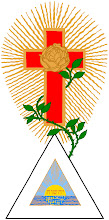
The Rose upon the Cross

Thus the Zodiac is not of the nature of the Elements, even if it corresponds to the Elements by Triplicity. But on the other hand it also corresponds to the Planets by rulership. But a Zodiacal Sign is neither an Element nor a Planet, but a Zodiacal Sign in its own right.

So there are three important hierarchies to consider here, that of Elements, Planets and the Zodiac. As there aren’t any special geometric forms wherewith to invoke the Zodiac, we may use either the Pentagrams (through the Elemental Triplicity) or the Hexagrams (through the Planetary Rulership) to invoke a particular Zodiacal Sign. But if a Zodiacal Sign belongs to a plane that is higher than that of a Planet, why then use Elemental Grade Signs which represents the most base forces of this hierarchical system, i.e. that of pure Elements? The L.V.X. Signs are applicable to invoke all forms of higher spiritual forces beyond the sublunary. Remember that the Zodiac proper belongs to the highest realm in this Hermetic system, only being overshadowed by the Primum Mobile of Kether.

The geocentric model of Claudius Ptolemäus

Concerning the suggestion that the use of L.V.X. Signs with the Zodiacal Pentagrams doesn’t represent orthodox or traditional GD practice. Well, the Ritual “B” (Pentagram Ritual) doesn’t state which Sign or Signs that are to be used together with the Zodiacal Pentagram, does it? So how can the use of the L.V.X. Signs in this instance be regarded as “untraditional”? Such suggestions are as speculative as anything else suggested in this discussion. The Golden Dawn Tradition left some gaps here and there to be worked out and filled in by the coming generations of Golden Dawn Adepts, which has also been done through the decades following the creation of the original GD corpus. One such example of development, which in my opinion is an adequate one and follows traditional Hermetic and Qabalistic teachings, is the use of the L.V.X. Signs together with Zodiacal Forces.

Furthermore, Zodiacal Magic belongs to the realm of Astrological Magic, as does Planetary Magic. Consider for a moment the Elemental attribution of the Planetary Hexagrams, the proper key to this being that of the Zodiacal attribution of the Quarters which reflects the Zodiacal wheel placed upon the Temple floor; starting with Aries (Fire) in East, going in a counter-clockwise motion towards North and Cancer (Water), then to Libra (Air) in West, and finally to South and Capricorn (Earth). This simple example of attributions clearly shows the intimate relationship between the Planets and the Zodiac, both being two parts of the workings of Astrological Magic.

The four forms of the Hexagram

Thus the proper Signs to use in all forms of Astrological Magic, be it moving stars (Planets) or fixed stars (Zodiac), are in my opinion that of the L.V.X. We already have a natural attribution of the L.V.X. Signs to the Planets, through the Hexagram Ritual, which always starts (and often ends) with the Analysis of the Key Word. Thus this naturally spills over to the Zodiac, because of the shared astrological nature.

S∴R∴

måndag 24 januari 2011

Hemligheternas brödraskap – en bokrecension

o

Svenska böcker om frimureriet tillhör inte det vanliga, om man bortser från konspiratorisk litteratur skrivna av paranoida psykotiker som Jüri Lina. Böcker om Svenska Frimurar Orden (SFMO) är ännu mer sällsynta. Lagom till SFMO:s 250 års-jubileum kom då förra året Peter Ullgrens bok Hemligheternas brödraskap: Om de svenska frimurarnas historia. Med tanke på att reklam och annonsering för boken görs i SFMO:s officiella tidning Frimuraren så måste man nog anse Hemligheternas brödraskap inte bara vara ”godkänd” utan även ”rekommenderad” av Orden. Med detta så menas inte att boken är ”sanktionerad” av SFMO, vilket säkert många konspiratoriskt sinnade individer kommer vilja påskynda. Tvärtom är den utgiven på ett oberoende och erkänt svenskt bokförlag, Norstedts, och av en oberoende (läs icke-frimurare till) författare, tillika docent i historia vid Lunds universitet.

Peter Ullgren gör själv en ganska så stor sak av att han är forskare som står helt oberoende från det objekt han studerar, vilket han anser är en självklarhet i den akademiska världen. Såldes ifrågasätter han frimureriska forskares objektivet, såsom Henrik Bogdans och Andreas Önnerfors’, som båda är aktiva akademiker tillika frimurare, enkom på grund av deras medlemskap i SFMO. Detta är ett spörsmål som är intressant i sig självt men som jag inte kommer att gå in på här. I senaste numret av Frimuraren (Nr. 4 2010) kritiserar båda dessa forskare och frimurare Peter Ullgren å det skarpaste för hans ståndpunkt i denna fråga. I denna fråga håller jag också med mina bröder Bogdan och Önnerfors. Som Susanna Åkerman påpekar i sin utmärkta recension av Hemligheternas brödraskap, även den publicerad i samma nummer av Frimuraren, så kan det finnas en fördel med att tillhöra eller utgöra en del av det man forskar i då man kan tränga studieobjektet mera in på djupet; lever man sitt objekt så förstår man det på ett annat sätt och mera till sitt inneboende väsen.

Nr. 4 av Frimuraren från 2010

En annan fördel med att både vara medlem i SFMO och forska om Orden är att man har tillgång till frimureriska arkiv som normalt forskare i den akademiska världen inte har tillgång till. Kjell Lekeby är ytterligare ett exempel på detta och som därigenom har kunnat ge ut antologin Gustaviansk mystik, vilket utgör en samling av olika frimureriska dokument från 1700-talet och som fram tills nu endast varit tillgängliga för frimurare. Dock har även Peter Ullgren haft en relativt fri tillgång till SFMO:s frimurarbibliotek, friare än någon annan oberoende forskare före honom. Detta har naturligtvis varit värdefullt för bokens innehåll. Bara av den anledningen är boken väl värd sin investering. Det rör sig dock inte om några längre citat av hittills hemliga dokument. För detta får läsaren vända sig till Lekebys Gustaviansk mystik.

Men när det kommer till beskrivningen av Ordens ritualer har Ullgren baserat sig på Dag Mogstads ökända norska bok från 1994, Frimureri: mysterier, fellesskap, personlighetsdannelse, vilket behandlar Norska Frimurare Orden (vilket är en klon av den svenska då båda, liksom den Danska Frimurare Orden, praktiserar det s.k. ”svenska systemet”) och ger detaljerade beskrivningar av både ritualer och symbolik. Detta har Ullgren varit nödgad till eftersom han av SFMO inte har givits tillträde till deras hemligaste mysterier – ritualerna. Dock har Ullgren den goda smaken att inte citera detaljer ur ritualerna utan endast ge korta sammandrag om vad som försiggår under ritualerna och deras viktigaste symboler, såsom arbetstavlor, etc. Så någon ny ”avslöjande bok” som Mogstads har vi alltså inte här. För någon som inte har gått igenom ritualerna själv så ter sig beskrivningarna som riktiga aptitretare. Ullgren beskriver ritualerna på ett mycket bra och intressant sätt, och tillräckligt informativt för att ge en viss känsla för vad man har att förvänta sig av det Svenska Systemet. Ullgren ger dock tillräckliga beskrivningar för att riskera att en del av överaskningseffekten kan poileras; läsare som är antingen är frimurare eller allvarligt överväger att bli medlemmar i SFMO rekommenderas att hoppa över de kapitel som beskriver de aktuella graderna.

Dag Mogstads bok om frimureriet

Vad skall man då säga om boken i övrigt? Jag måste erkänna att jag är tämligen kluven eller högst ambivalent till Hemligheternas brödraskap. Boken har helt klart sina ljusa sidor. En del av detta har jag redan nämnt. Den har dock också sina tydliga svagheter, även det delvis redan nämnt. Vad som mer kan sägas vara positivt med boken är dess lediga, okomplicerade och stundtals lättsamma språk; boken är lättläst. Den är personligt skriven – men tyvärr blir det lite för mycket med det personliga då Ullgren ger uttryck åt sina egna och högst irrelevanta åsikter om olika frimureriska eller perifer-frimureriska fenomen. Något jag stör mig mest på med denna bok är dess uttalat föraktfulla ton gentemot de mer ockulta och esoteriska inslagen bland frimurare, mestadels kring Hertig Carls esoteriska krets (kallat ”Sanktuariet”), vilket Kjell Lekebys bok gör en djupdykning i. Han drar alla dessa frimureriska esoteriker i princip över en kam och kallar dem i ett slag för ”scharlataner”, ”bondfångare” och annat dylikt nervärderande.

Det känns som om Ullgren försöker att förringa den egentliga frimuriska kopplingen till dessa ockulta aktiviteter, ledda av frimurare såsom Carl Anders Plommenfelt, Gustav Björnram, Henrik Gustaf Ulfvenklou och Carl Adolf Boheman. Detta ter sig som en smula ironiskt när man betänker hur Ullgren kritiserar forskande frimurarbröder för att ha en blind fläck, just på grund av sin subjektivtet och förkärlek för sitt objekt, när författaren själv ger uttryck för ett likadant subjektivt tyckande fast åt det föraktfulla hållet. Vad Ullgren borde göra är att läsa inledningen till Kjell Lekebys Gustaviansk mystik, där det i vetenskapens namn klart och tydligt sägs att det största misstaget en forskare av historia kan göra är att bedöma och värdera ett historiskt objekt efter sina egna och samtidens moderna värderingar. Idéhistoria borde utgå från ett hermeneutiskt förhållningssätt där man eftersträvar ett närmande av sitt ”objekt” på ett fördomsfritt och öppet sätt. Detta kan man inte säga om Ullgrens bok, i alla fall inte när han behandlar den frimureriska pereferin runt Hertig Carls Saktuarium-verksamhet. Vad vi kan se här är närmast ett prov på fenomentet autotomi, dvs. självstympning, vilket jag beskriver mer i detalj i min recension av Carl- Michael Edenborgs bok Alkemins skam.

Kjell Lekebys Gustaviansk mystik

Även om Ullgren själv inte är frimurare, vilket han stolt bekänner, så tycker jag ändå boken är ett uttryck för autotomi, eftersom Ullgren i övrigt har en uppenbart sympatisk inställning till det svenska frimureriet som ett samhälls- och kulturfenomen. Å ena sidan nästan han höjer frimureriet till skyarna, och därigenom lägger stort fokus på dess personlighetsutvecklande aspekt och på dess välgörenhetsverksamhet, och även försöker att försvara dess högre och religiösa mysterier som förmedlas genom dess gradsystem, samtidigt som han försöker att avskilja den ockulta svansen från den frimureriska kroppen. I och med detta förbiser han dock att den esoteriska mystiken i själva verket tidigt var en viktig ingrediens i frimureriet, i synnerhet i dess s.k. högregradssystem och Tempelherre-mystik. Trots att Ullgren själv erkänner frimureriets starka Qabalistiska inslag, i sin utläggning av James Andersons The Constitutions of the Fee-Masons, vilket han tillägnar ett helt kapitel, så lyckas han att helt förbise det faktum att även Qabalistiken var en mycket viktig ingrediens i Hertig Carls Sanktuarium-cirkel. Både Hermeticismen och Qabalah utgjorde i synnerhet viktiga pelare både i det svenska frimureriet och i Sanktuariet.

I synnerhet blir detta förhållningssätt hos Ullgren tveksamt när man betänker att just Hertig Carl, en av de mesta svenska kungliga esoteriker genom tiderna, också är den som reformerar det Svenska Systemet till var det är idag, under en tid då Hertigens Sanktuarium är som mest verksamt. Hur kan man då bortse från det faktum att esoteriken utgjorde en viktig och formativ grund för det Svenska Systemets utveckling? Vet herr Ullgren om att just Boheman införde de Asiatiske Bröderne, det klassiska Rosenkorsiska ridderliga brödraskapet, till Sverige och att dess system praktiserades i Hertigens Sanktuarium, på Stockholms slott? Hur kan man då påskynda att den ockulta verksamheten kring Hertig Carl, framdriven av starka och dynamiska individer såsom Plommenfelt, Björnram och i synnerhet Boheman, inte utgjorde en del av SFMO, när samtliga var medlemmar av just denna Orden och dessutom samlades runt SFMO:s Stormästare Hertigen av Södermanland? Jag tror personligen inte att Hertigen själv gjorde så stor skillnad på sin frimureriska verksamhet och på sitt Sanktuarie-arbete. Sanktuariet (vilket var namnet på själva Tempel-salen i Hertigens privata våning på Stockholms Slott) självt var ju uppbyggt kring idén om Salomos Tempel, vilket även det svenska frimureriet är.

Salomos Tempel

Av många, även frimurare internationellt, anses just det Svenska Systemet som ”esoteriskt” i förhållande till exempelvis det engelska frimureriet. Denna ryktbarhet har det säkerligen fått genom både sina initiala franska anslag – det skottska systemet – och senare det tyska frimureriet och den Stricta Observansen (Tempelherremystiken), men inte minst på grund av Hertigens stora esoteriska intresse för allt Rosenkorsiskt, Qabalistiskt och Hermetiskt. I synnerhet det tyska frimureriet var vid samma tid Qabalistiskt och Hermetiskt till sin natur, och konkurrerade med det alkemistiska sällskapet Gold- und Rosenkreutz Orden om vem som förvaltade alkemins innersta mysterier. Det är ingen slump att både frimureriet och alkemin kallas för ”Den Konungsliga Konsten”. Genom att bortse från den ”esoteriska klicken” bland frimurare bortser Ullgren även från frimureriets själ eller motor (primum mobile) – esoteriken. Därför är det en stor brist att Ullgren i sin analys av det svenska frimureriet helt saknar ett akademiskt esoterisk perspektiv, vilket Susanna Åkerman lyfter fram i sin recension av Hemligheternas brödraskap, som exempelvis baseras på Antonie Faivres och Wouter J. Hanegraaff internationellt erkända forskning. Frimureriet anses av forskare som dessa utgöra en viktig del av den västerländska esoteriska traditionen.

Dessutom tycker jag att första halvan av boken, den del som behandlar 1700-talet, är den klart mest givande och underhållande. I denna del beskriver Ullgren på ett mycket bra, underhållande, fängslande och pedagogiskt sätt det svenska frimureriets komplicerade och mångfacetterade framväxt, något som jag t.o.m. bättre har kunnat ta till mig jämfört med frimureriets egna skrifter och undervisning. Intressant nog lämnar Ullgren även dörren öppen för den kontroversiella teorin om Tempelherre-Orden som ett eventuellt ursprung till frimureriet i Skottland, och i detta även kort presenterar idén om Rosslyn Chapels eventuella koppling till allt detta. Ullgren går varken in för att vederlägga eller bevisa dessa teser och lämnar sålunda frågan öppen för andra att besvara. Uppenbarligen verkar han själv har dragits med i Tempelherre-mystikens dragningskraft, vilket sannerligen är förförisk och tilltalande.

Hertig Carl som Tempelherre

Andra halvan av boken ägnar dock uteslutande tid åt det svenska frimureriets utveckling under 1800- och 1900-talen, vilket är en betydligt mer trist läsning. Detta får man dock inte lasta Ullgren ensamt för; den frimureriska historiken blir faktiskt tråkigare ju längre från 1600- och 1700-talet det avlägsnar sig. Sannerligen utgör 1700-talet en betydligt mer underhållande läsning och ger den mesta behållning av boken, med de olika dynamiska personligheterna, interna kamperna och inte minst de ockulta inslagen. Under 1800-talet och framgent ser man ett frimureri som blir betydligt mer ”mainstream” och politiskt korrekt, närmast en statlig institution, trots att de olika konspiratoriska myterna aldrig helt dör ut under samma tid, det sista något som också Ullgren gör en ganska så stor sak av och analyserar, och tillika avväpnar på ett passande och lämpligt sätt. Tack och lov får man väl tillägga och i grevens tid. Men därigenom känns boken också lite grann som ett uttryck för att försöka rentvå SFMO från alla dubiösa och konspiratoriska inslag. Detta är som sagt ett bra och sympatiskt inslag hos Hemligheternas brödraskap, även om det öppnar upp för en vedergällning från konspirations-teoretikerna i fråga om författarens partiskhet.

Sammanfattningsvis har vi alltså här äntligen en bok skriven av en oberoende, erkänd och seriös forskare som inte faller för frestelsen att vältra sig i alla konspiratoriska fallgropar, så typiskt för den frimureriska genren. Men samtidig, och i ivern med att rentvå det svenska frimureriet från alla falska anklagelser och försöket med att släta ut eller förklara innebörden av de myter som verkar har sin grund i verkligheten, så kaster Ullgren även ut barnet med badvattnet. I detta fall får barnet symbolisera frimureriets esoteriska essens. Dock skulle jag detta oaktat rekommendera Hemligheternas brödraskap för alla dem som undrar vad Frimureriet verkligen handlar om och går ut på, i synnerhet utifrån dess personlighetsutvecklande aspekt vilket lyfts fram på ett mycket bra sätt i boken. Boken är också en bra läsning angående om det verkligen finns något korn av sanning bakom alla dessa rykten om barnoffer, kistor, dödskallar och blodsritualer. På många sätt ställer boken till rätta med och ger en god förklaring till vad Svenska Frimurar Orden verkligen står för, trots dess autotomiska tendenser och anti-esoteriska hållning.

S∴R∴

lördag 8 januari 2011

Alkemins skam – en bokrecension

o

För ett par månader sedan fick jag Carl-Michael Edenborgs bok Alkemins skam i min hand. Jag minns hur jag tänkte att oavsett kvalitén på denna bok så är det anmärkningsvärt att litteratur inom ämnet Alkemin ges ut i vårt land och på vårt eget modersmål. Bara av den anledningen är det väl värt att läsa igenom boken, tänkte jag. Och jag blev inte besviken. Det är ett mycket intressant och välskrivet verk som Edenborg har ställt samman.

Författaren Carl-Michael Edenborg är mest känd idag som förläggare och driver det alternativa bokförlaget Vertigo, som bland annat har givit ut Kjell Lekebys Gustaviansk Mystik, en annan tung titel inom ämnet svensk esoterik som jag måhända kommer att återvända till i ett senare skede. Edenborg har dessutom tillägnat sin bok till Lekeby. Alkemins skam har dock givits ut på punkförlaget No Fun. På sin blogg Vertigomannen skriver Edenborg följande om projektet:
Började intressera mig för alkemi 1989. Hade sedan ett par år suttit på KB [Kungliga Biblioteket] och forskat i udda svensk litteraturhistoria, minns inte exakt hur guldmakeriet kom in i synfältet, men snart kom ämnet att dominera mitt arbete. Till en stor del berodde det på att det var så okänt. Förbluffande lite historisk forskning hade gjorts om alkemin i Sverige, förbluffande lite var känt om denna märkliga tradition med dess utopiska ambitioner och poetiska diskurser. Dessutom föreföll mig alkemin kombinera praktisk revolt och poetisk skönhet på ett tilltalande sätt. 2002 kom min doktorsavhandling Alkemins skam och därefter förföll alkemiintresset...
Det är en tämligen så intressant redogörelse då den ganska passande beskriver den uppslukande effekt som Alkemin i Alkemins skam sägs ha på sina utövare, som Edenborg på flera ställen i boken liknar vid ett spelmissbruk. Det Vises Sten liknas vid den omöjliga miljonvinsten som ständigt driver missbrukaren i hans mani. Edenborg ger en mer konkret redogörese för de synkronistiska händelser som tog fart i hans alkemistiska sökande, i samband med ett besök i den berömda ockulta bokhandeln Table d’Emeraud (”Smaragdtavlan”) år 1989:
Där började plötsligt den gamla farbror bakom disken prata svenska med oss. Det visade sig att denne estländare varit bosatt i Sverige. När han hörde om mitt intresse för alkemi tipsade han oss om en person som kunde vara intressant att träffa: Arne Wettermark, personlig vän med den legendariske franske alkemisten Eugène Canseliet, Fulcanellis lärjunge.
Edenborg kontaktade Arne Wettermark i Sverige året därpå. Under detta möte uppmanade Wettermark Edenborg då att ta kontakt med Kjell Lekeby:
Mötet med Kjell blev också livsavgörande. Det var han som uppmuntrade mig att börja studera latin. Det var han som fick mig att börja plugga idéhistoria. Det var han som med fruktansvärd, noggrann grymhet läste igenom mina texter och klottrade dem röda med rättelser och invändningar och därigenom fick mig att gråta; men han lärde mig samtidigt skrivandets konst.
Detta märks också i boken Alkemins skam och jag slås tämligen snart över den avancerade och vackra svenskan som denne unge svenske man kan leverera, något som sällan ses i akademisk litteratur av detta slag. Så det är dessutom en estetisk bok, vid sidan om den rena faktan som den förmedlar. Samtidgt visar författaren prov på en i grunden positiv hållning till och intresse för ämnet Alkemi, vilket gör läsningen så mycket mer angenäm. Det är naturligtvis försvarbart utifrån att boken på ett objektivt sätt försöker att göra en analys av Alkemins fiende och dess ansträngningar till skambeläggande. I detta upplever jag att författaren närmast tar en sympatetisk ställning för Alkemin och mot dess skam, eller åtminstone upplever man författarens medlidande för den skambelagde.

Själva spörsmålet som boken söker att besvara är alltså hur det kommer sig att den alkemiska diskursen och bokutgivningen plötsligt rann ut i sanden under det sista decenniet av 1700-talet från att helt tystna några år in på 1800-talet. Edenborg menar att detta var resultatet av en medveten förtalskampagn från upplysningsfilosofernas sida, som genom skambeläggelse strävade efter att ta död på Den Konungsliga Konsten och faktiskt till slut verkade lyckas med detta (eller lyckades de verkligen?). Dock skedde detta inte utan en vildsint kamp från alkemisterna själva och i ett särskilt kapitel redogör Edenborg för de olika taktiska stilgreppen man tog till i Alkemins försvar.

Ett av dessa konstgrepp var den så kallade autotomin eller självstymptningen, dvs. att utesluta en del av sig själv för att rädda det som finns kvar. Häri görs en skillnad mellan sanna alkemister och vulgära guldmakare – puffers eller souffleurs. Man får en känsla att Edenborg på något sätt tror att det är ett relativt sent tilltag för att rädda den alkemiska anseendet mitt i skambeläggandet, trots att han faktiskt själv nämner att det är ett lika gammalt fenomen som Alkemin själv. Alkemisterna har alltid gjort en skillnad mellan sig själva som invigda i Den Konungsliga Konsten och de övriga profana guldmakarna, ty Alkemin har alltid kantats i sin historia av bedragare och charlataner.

Ser man tillbaka i den klassiska alkemiska litteraturen från 1500- och 1600-talen så ser man hur de olika traktaten nästan alltid inleds med vad De Vises Sten inte är, men som förledda guldmakare genom tiderna har trott att den är. De flesta traktat är skrivna för att, så att säga, visa var skåpet skall stå. Således är detta inte alls ett sätt att rädda Alkemin från en undergång, utan snarare en av dess elitistiska och exklusiva drag som har funnits där från början och som fortfarande finns där idag (jämför med dagens alkemiska diskurs där skillnad görs mellan Alkemi och Spageri); det är en del av dess inneboende natur. Det handlar alltså inte om egentlig autotomi; guldmakarna har aldrig utgjort en del av den sanna Alkemiska kroppen eller diskursen utan utgörs snarare av oinvigda som strävar efter att bli en del av den men som inte tillåts att anträda det heliga Templet på grund av sin okunskap eller vulgära strävan.

Det verkar dock, om man skall förstå Edenborg rätt, att denna tendens tilltog under processen av skambeläggande till den grad att vissa alkemister till slut vägrade ta ordet Alkemi i sin mun, utan hänvisade till Den Konungsliga Konsten som ”Högre Kemi”. Denna senare tendens vittnar i så fall om en verklig autotomi. Detta var dock ett dött lopp. Nya tider hade kommit för att stanna. Edenborg visar på ett skickligt sätt hur Alkemin såsom filosofi och konst representerade en svunnen tid och tradition som hade sin förankring i den feodala medeltiden och adelskapet, något som 1700-talets borgerliga upplysning och marknadskapitalism gjorde allt för att bekämpa. Alkemins allegoriska tal om konungar, drottningar, drakar och andra sagolika vidunder attraherade den gamla överklassen men rejekterades av den nya medelklassen, i synnerhet i kölvattnet på den franska revolutionen. Kungamaktens magiska gloria var till ända, och så även Alkemin – Den Konungsliga Konsten – som flörtade med dessa symboler. De borgerliga och sekulariserade upplysningsmännen fann Alkemins symbolik inte bara förlegad utan även dekadent, precis som den överklass den försökte att bekämpa.

En av de mest intressanta aspekterna med Alkemins skam är den självbild som Edenborg försöker att måla upp av Alkemin. Det Vises Sten symboliserade för alkemisten hans absoluta suveränitet, både i förhållande till samhället men också i förhållande till materien. Genom De Vises Sten kunde alkemisten göra sig helt ekonomiskt oberoende från samhället och han kunde framför allt göra sig odödlig – bli såsom en gud. Därigenom gjorde han det sociala samlivet till något överflödigt. Alkemins yttersta mål var sålunda i grunden asocialt. Detta var också något som skambeläggarna gjorde en mycket stor sak av, att alkemisterna strävade att göra sig socialt oberoende.

Enligt upplysningsmännen utgjorde Alkemin således ett hot mot den sociala ordningen och ansågs därigenom vara onyttig (läs sakna allmännytta). På ett skickligt sätt visar Edenborg att kritiken mot alkemin främst var moraliskt motiverad, inte vetenskapligt. De flesta kemister gjorde inget stort väsen av ”omöjligheten” med Det Stora Verket utan snarare vilka konsekvenser det kunde få om det hade lyckats men framför allt begäret hos de enskilda alkemisterna, som de ansåg var smutsigt och syndigt. Vissa hävdade att det var naturvidrigt och gick emot Guds plan. I skambeläggandet jämförde man alkemins verk med exkrement, med smuts och annat dyligt vidrigt.

Alkemin jämfördes med en farsot som det var mycket svårt att bli botad från om det hade gått tillräckligt långt. Alkemin jämfördes med en psykiskt sjukdom, en form av melankoli, och alkemisterna själva såsom psykiskt sjuka. Det var därför upplysningsmännens ansvar att rota ut alkemin en gång för alla så att den inte spred sig ännu längre och drabbade fler oskyldiga människor. Flera exempel på alkemister som hade investerat hela sin familjeförmögenhet och blivit barskrapade, med djupa familjetragedier i kölvattnet, hängdes ut i den kritiska litteraturen.

I ljuset av en sådan bredsalva från det sena 1700-talets folkupplysningsmannakår är det lätt att förstå varför Alkemin plötsligt försvann ur offentligheten, eller valde att försvinna. En intressant analys som Edenborg gör är att det offentliga rummet under samma tid utvidgas, vilket gör allehanda esoteriska (slutna) ämnen högst kontroversiella. Det var helt enkelt inte i tiden längre att hänvisa till tystlåtenhet och elitism; vetenskap skulle blottläggas och tillhörde numera alla enligt de Baconska idealen. Edenborg visar även på exempel bland alkemister som försöker att anpassa sig till denna öppenhet men menar att det egentligen var fåfängligt då alkemin var förborgad till sin innersta natur.

Man kan dock problematisera Alkemins yttersta mål en aning. Det är sant att emancipation är ett av dess mål, dvs. en frigörelse från ett fullkomligt beroende av materien och kroppens begränsande skröplighet. Det är sant att De Vises Sten resulterar i odödlighet och att detta är eftersträvansvärt av alkemisten. Men är detta verkligen det egentliga och yttersta målet med Alkemin? Jag anser inte det. Jag anser att målet är att fullkomna den mänskliga naturen, vilket enligt Alkemin består av mer än den fysiska kroppen. Sannerligen strävar alkemisten att bli medveten om sin subtila kropp (eller subtila kroppar) och att skapa ett fritt flöde mellan dessa och den fysiska kroppen. Genom en transmutationsprocess av den fysiska kroppen strävar alkemisten att till fullo uppväcka och utveckla sin Solara kropp, vilket är vägen till odödlighet hos själen. Men alkemistens odödlighet är ett tecken på att han eller hon också har erhållit ett Kosmiskt Medvetande, eller Gudomlig Upplysning, vilket är det egentliga yttersta målet.

Detta resonemang kan delvis liknas vid den hinduiska synen på återfödelse; det är på grund av själens flyktighet och förmåga att upplösas – genomgå den andra döden – som den fortsätter att reinkarnera. För att bryta cykeln av återfödelser måste människan uveckla sin själs fulla potential, något som Alkemins Stora Verk strävar efter att fullfölja. De Vises Sten anses ha denna transmuterande effekt på den mänskliga kroppen och därigenom dess högre väsensled; dess förmåga att transmutera oädla metaller till ädla är endast ett experiment för att bevisa dess verkliga potential. Således är det ekonomiska oberoendet som följer sekundärt och det upprepas åter och återigen i den klassiska alkemiska litteraturen att materiell rikedom aldrig får utgöra ett begär hos alkemisten, på det att han kommer att misslyckas i sitt uppsåt. Endast de som är rena i själen och drivs av oegennyttiga ambitioner kan – genom Guds Nåd – lyckas i Det Stora Verket och uppnå själens odödlighet och ett Solart Medvetande. I den alkemiska litteraturen ser man exempel på att alkemister har donerat sina rikedomar och nyttjat sina kunskaper för att lindra lidande och fattigdom, det mest kända exemplet varande Nicholas Flamel. Men även Paracelsus är ett exempel på en alkemist som använde Alkemin för att bota de sjuka. Detta är sant Adeptskap.

Edenborg beskriver också tämligen ingående vad som hände med Alkemin vid övergången från upplysningen till romantikens tidevarv under 1800-talet, och romantikens högst ambivalenta förhållande till Alkemin. Kort och gott kan man säga att romaniken sympatiserande med alkemins essens men var högst kritiskt till den i sin praktiska och materiella specificitet. Man ansåg alltså att Det Stora Verket var ett fåfängt försök men likväl sympatiskt, som harmonierade med romantikens egen naturfilosofi. Därför framställdes alkemisten ofta i den romantiska litteraturen som en tragiskt och missampassad figur. Edenborg menar att detta förhållande som romantiken hade till Alkemin måhända var ännu mer skadligt för Alkemin jämförelsevist med dess tidigare skambeläggande, eftersom romantiken tog till sig en vag idé om Alkemin men effektivt förvisade dess konkreta form.

I ett tämligen långt appendix beskriver Edenborg att Alkemin trots allt överlevde men att diskursen mellan alkemister hädanefter helt utspelade sig sub rosa och representerades av brevkorrespondens snarare än genom boktryckarkonst. Edenborg gör en tämligen detaljerad beskrivning av Sigismund Backstrom, som var verksam under 1700-talet slut och 1800-talets inledning, vilket är intressant för mig personligen. Dock representerade Backstrom en av de sista mästarna som ägnade sig åt traditionell Alkemi och under 1800-talet ser vi en ny filosofi se dagens ljus, enligt Edenborg främst med draghjälp av Eliphas Levis böcker, där alkemistiska transmutationer förvisso fortfarande anses vara fullt möjliga men endast tack vare alkemistens magiska viljekraft. Atomerna sågs nu för första gången vara påverkbara av alkemistens övernaturliga viljeförmåga, från att tidigare ha baserat sig på processerna själva, alkemistens förmåga att förena sig med ämnet och framför allt hans förmåga till andlig fromhet och Guds nåd. Det var även under denna tid som den romantiska föreställningen av en ”andlig alkemi” för första gången dök upp, där Det Stora Verket ansågs vara metaforer för andlig inre transformation snarare än kemiska processer.

Min egen syn på detta nya tänkande, om man bortser från den rena ”andliga alkemins” nonsens, är att det dels inte är så främmande för Alkemin som man kan tro men att det samtidigt måste sättas i ett traditionellt sammanhang. Alkemins devis har alltid varit Ora et Labora, vilket ordagrannt kan översättas till ”be och arbeta” men snarare bör renderas till ”åkalla och verka”. I Alkemins skam görs ofta gällande att hopkoket av olika ockulta konster, såsom blandningen av Magi, Astrologi, Tarot och Alkemi, utgör ett påfund av sent 1800-tal. Sanningen är dock den att Alkemi alltid har integrerats med Magi och Astrologi och att detta redan utgjorde en standardiserad studieplan hos gamla och ärevördiga Alkemiska och Rosenkoriska tyska sällskap såsom Gold- und Rosenkreutz Orden och Asiatiske Bröderne, båda verksamma på 1700-talet. Fokus på Vilja och Föreställning kan tyckas utgöra typiska uttryck för post 1800-tals magisk litteratur, men sanningen är att Vilja och Föreställning är de två komponenter i människans konstitution som sätter igång Universum att vibrera i enlighet med hennes önskningar.

Detta innebär dock inte att mänsklig Föreställningsförmåga och Viljekraft ensamt kan transmutera en stycke koppar till guld; vi pratar inte om mirakel här. Sålunda kan den mänskliga förmågan inte gå emot naturens vägar. Alkemin är alltid inbegripen med att följa naturens väg, att accelerera denna och driva på evolutionens processer i något som kan liknas vid en intensiv ”växthuseffekt”. Alltså måste alkemisten följa de traditionella anvisningarna om att använda rätt Prima Materia – ämnet som har valts för processen – och dessutom följa de klassiska alkemistiska processerna till punkt och pricka – Labora. Alkemin är nämligen en exakt vetenskap, inte blott en konst. Samtidigt måste alkemisten inbegripa den magiska förmågan hos sin mikrokosm (genom Föreställning och Vilja) och förena denna med makrokosmen (Gud-Universum-Världssjälen). Genom denna förening mellan sig själv och Gud kan den alkemiska processen nå sitt mål i ett gemensamt mänskligt-gudomligt uppsåt. Alkemisten måste alltså aktivt sträva efter att skapa denna synkronicitet mellan sitt eget väsen och Guds väsen, varigenom han eller hon görs till ett passivt redskap för det gudomliga – Ora.

Mot slutet beskriver Edenborg den alkemiska renässansen vid 1880-talet, mestadels genom den nya generationen franska alkemister som representerade den s.k. ”hyper-kemin”, bl.a. Francois Jollivet Castellot och kretsen kring denne. Vår egen August Strindberg blir också omnämnd i detta sammanhang, även om han representerade en generation av hyper-kemister som inte baserade sig på kassiska alkemiska verk utan snarare på moderna kemiska rön. Edenborg beskriver också den engelska alkemiska renässansen som var samtida med den franska och som främst representerades av Frederick Hockley (som besatt flera manuskript av Backstrom), W.A. Ayton och William Wynn Westcott. Dessa sista namn figurerade inom Hermetic Order of the Golden Dawn.

Vid sidan av Madam Blavatskys bokpublikation och A.E. Waites redaktörskap i olika projekt, såsom The Hermetic Museum, anser Edenborg att W.W. Westcotts Collectanea Hermetica vara det verk som lade grunden för den alkemiska renässansen i England. Till sin hjälp hade Westcott ett antal Golden Dawn Adepter som kommenterade bokserien, bl.a. Florence Farr och Frederick Leigh Gardner. Konstigt nog nämner Edenborg inte S.L. MacGregor Mathers i detta alkemistiska sammanhang, vilket kan tyckas vare en aning märkligt. Det finns nämligen inget som tyder på att de tidigare uppräknade Golden Dawn Adepterna, inklusive Wetscott, sysslade med praktisk laboratorie alkemi vid den här tiden, med undantag för W.A. Ayton som var något av en alkemisk mentor i Golden Dawn. Förvisso var MacGregor Mathers inte involverad i projektet kring Collectanea Hermetica men han har detta oaktat med stor sannolikhet lämnat efter sig den enda praktiska instruktionen för alkemi som gjordes inom Golden Dawn och dess Inre Orden Rosae Rubeae et Aureae Crucis.

De flesta lärda inom Golden Dawn är idag överens om att Ritual ”Z” på något sätt har involverat MacGregor Mathers hand och det är i detta manuskript vi finner den alkemiska operation som kommer i fråga. Detta dokument är uppdelat i tre delar och det är i Ritual ”Z-2” där dessa alkemiska instruktionerna återfinns. Dessa är en kombinerad form av formel för Ceremoniell Magi och praktisk laboratoriealkemi, inom ramen för Golden Dawns Neofyt-ritual, en tämligen komplicerad process som är alldeles för omfattande att säga något om inom ramen för denna recension. Jag vill dock påstå att MacGregor Mathers kunskaper och erfarenheter om praktisk Alkemi vida överträffade dem hos W.W. Westcott.

Men bortsätt från detta är det ändå smickrande att läsa vilken vikt som Edenborg lägger hos Hermetic Order of the Golden Dawn för den alkemiska renässans som inleddes 1888 i London. Carl-Michael Edenborg har i sin bok och avhandling dessutom visat prov på att han besitter tämligen stora teoretiska kunskaper om ämnet. Detta märks i synnerhet under kapitlet som avhandlar Romantiken och 1800-talet, där han kategoriskt avfärdar en hel del tankar som tämligen otraditionella. Trots detta är Alkemins skam inte en bok om Alkemi per se, utan snarare om de processer som ledde till dess skambeläggande. Det är inte en bok som tar ett esoteriskt perspektiv, utan snarare ett idé-historiskt och sociologiskt. Detta till trots tycker jag att man som läsare kan hämta mycket kunskap om Alkemins tankegods.

Sammantaget anser jag Alkemins skam vara en av de bästa, mest välskrivna och researchade böcker som har skrivits i vårt land inom ämnet Alkemi. Att det är en doktorsavhandling borgar för en noggrann notapparat och ordentliga källhänvisningar. Utifrån dessa som presenteras kan man bedriva egen seriös efterforskning i olika europeiska bibliotek. Edenborg har också förlitat sig på mycket förstahandskällor. Alla översättningar och citat har han i notapparaten noggrant återgivit i sitt originalspråk. Det finns dock några typografiska fel, inga direkta felstavningar utan snarare insatta bindesträck som vittnar om att formatet ursprungligen inte var tänkt att vara det som det till slut blev. Boken har givits ut i en tämligen enkel paperback-utgåva och i ett tämligen onormalt format (16.5 x 15 cm) som mer påminner om en manual snarare än en bok. Boken innehåller inte heller några som helst illustrationer.

Detta till trots är boken ändå lättläst och språket lekfullt skrivet så att man som läsare aldrig riktigt tappar intresset. Diskursen är också tämligen varierande och jag har endast tagit upp en liten bråkdel av det som tas upp i boken. En sådan är exempelvis en intressant avstickare till Immanuel Kants kritik av Alkemin. Det känns som att författaren tar med läsaren på en idé-historisk resa från mitten på 1700-talets Tyskland och som slutar vid 1920-talets Frankrike, vilket även omfattar Storbritannien och Amerika, och här och var även konungariket Sverige. Därigenom har boken ett högt underhållningsvärde som kan liknas vid den hos en roman. Läsaren besparas således en torr akademisk avhandling, trots att den just är en akademisk avhandling. Detta är ett konststycke i sig och ett gott exempel på hur akademiska avhandlingar borde kunna skrivas.

S∴R∴

fredag 31 december 2010

Early Swedish Rosicrucians

o

I found a highly interesting reference to Sweden and the early Rosicrucians just recently, made by the French esotericist Jacques-Etienne Marconis de Negre, one of the founders of the Memphis Rite in 1839, which I would like to share with you on this New Year Day’s Eve.

In 1849 Marconis de Negre published Le Sanctuaire de Memphis (“The Sanctuary of Memphis”), which basically presents an sligthly alternative Templar legend regarding the origin of the Rosicrucian and Masonic Orders. It starts off with the usual account of Ormus, his conversion to Christianity by S:t Mark, the union of his school with that of the Essenians and other Jewish sects. But where it gets really interesting is where we reach the age of the crusades. Let me quote the pertinent part:
Untill 1118, Ormus’ disciples were the only depositories of the ancient Wisdom of Egypt (purified by Christianity), as well as of the Templar Science. These were known as Knights of Palestine or Rosicrucian Brethren of the Orient, that the (Masonic) Rite of Memphis regards as its immediate founders.

In 1150, eighty-one of them arrived at Sweden, having Garimont as their leader, and presented themselves to the archbishop of Upsala, to whom they bequeathed the heritage of Masonic knowledge. These eighty-one Masons established Free-Masonry in Europe.

After the death of Jacques de Molay, the Scottish Templars, apostates at the king’s (Robert Bruce’s) instigation, gathered under the standards of a new Order that this prince had instituted. The receptions in this Order were based in those of the Order of the Temple. Here is the origin of the Scottish Masonic Rite – and of the other Masonic Rites as well.

The Scottish Templars were excommunicated by Larmenius in 1324. This date agrees with the one given by Br. Chereau, regarding the separation of the Masons of Edinbourg with the Masons of Memphis: 1322, which is two years earlier.

The Masons of Memphis rested faithful to the ancient traditions; the others founded a new Rite, called Rite of Heredom de Kilwinning or of Scotland.

Thus, from the late 14th century, two Rites exist: the Rite of Memphis or of the Orient and the Scottish one. Both continue to attract followers all over Europe.
This reference to Upsala in a Masonic context I have never seen before. Upsala is the former Capital of Sweden, and was a centre of commerce during the Viking age. Today it is a city of learning, housing one of the greatest Universities in Sweden. There are also supposed to be remnants of some Swedish churches originally built by Templars. Historical research shows that there was a quite significant presence of Templars in Sweden during the reign of House of Bjelbo (also known as the House of Folkung), which went so far to even embrace members of this Royal House as members of the Templar Order, through which the latter received both land and mansions from the former.

But this connection of the Masonic and Rosicrucian legend made to Sweden is original. According to this legend Masonry was introduced to Sweden one and a half century prior to it finding its ground in Scotland. Furthermore, masonry of Sweden is here portrayed as being the esoteric and Rosicrucian one while the Scottish one is practically labelled as exoteric, being that of Blue Lodge Freemasonry. Even if this is just another of several fanciful Rosicrucian legends, I find this one particularly fancy and likable being a Swede.

I wish you all a Happy New Year!

S∴R∴

onsdag 8 december 2010

Prejudice against Magic and the legacy of the Golden Rosy+Cross

o

A while ago I stumbled across someone asking why major organizations calling themselves “Rosicrucian” talks degradory about magic and what members of any of the Golden Dawn Orders had to say regarding this. The fact is, as it seems, that most organizations which uses the words “Rosicrucian” or “Rosy Cross” in their name (some of them even trade marking the word “Rosicrucian”) seems to have a very low opinion of magical practice and the magical world view which is common in the Golden Dawn Tradition.

Firstly, the big reason for these “Rosicrucian” organizations to take such a stance against magic is simply out of appeal to the greater mass. In comparison with the organized Golden Dawn community (and also the Thelemic) the big-name “Rosicrucian” organizations have a very large following which may be comparable to world-wide Freemasonry in magintude. Simply put, these “Rosicrucian” organizations are for the many, G∴D∴ is for the few. The level of training and study in any Golden Dawn organization will put most people off who have found comfort in any of the big name “Rosicrucian” organizations. On the other hand, as with Freemasonry, the big name “Rosicrucian” organizations are also quite wealthy and in most cases are able to present very impressive infrastructure and material means to present not only voluminous correspondence courses but also impressive grand scale lodge spacings, etc.

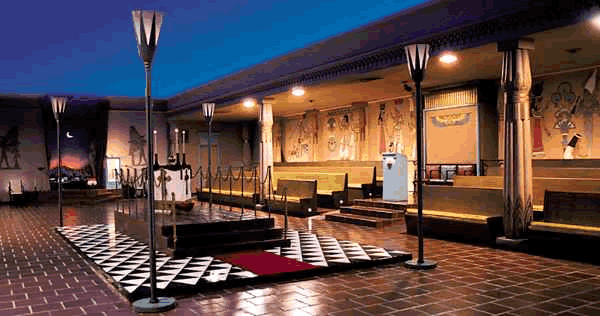
A.M.O.R.C. Temple

I happen to have a past in one of these big name “Rosicrucian” Orders, the A.M.O.R.C. (“Ancient and Mystical Order of the Rosy Cross”), but left that organization because of it frequently branding anything magical or occult as being “superstitious”, and contrasting it to mysticism. I soon went over to the B.O.T.A. (“Builders of the Adytum”), while still being a member of A.M.O.R.C., through some contacts there, and from B.O.T.A. into the Hermetic Order of the Golden Dawn (again through some contacts in the B.O.T.A.), as I lacked instruction on Ceremonial Magic in the former organization; thus out of necessity the one led into the other. The level of study and practice in the B.O.T.A. is on an entire different level compared to A.M.O.R.C. (already in its early levels), and the practical work in the G∴D∴ on yet a higher level of complexity compared to Paul Foster Case’s and Ann Davies’ correspondence courses in the B.O.T.A. Thus, my real WORK began with entering the Hermetic Order Order of the Golden Dawn.

But already in the B.O.T.A. you have traditional occult teaching in its courses which is based upon the Qabalistic and Hermetic system of the Golden Dawn (remember P.F. Case was a former Adept of the Rosicrucian Order of Alpha et Omega). One such example is the use of the Tarot (which seems to be lacking in A.M.O.R.C.), and later the Tattwas, which is clearly occult in its orientation. Ann Davies developed this further and made it even more “magical” in its application. In Case’s early papers for the School of Ageless Wisdom and his Chapter (the equivalent of G∴D∴ Temple) papers there are quite a lot of teachings regarding Ceremonial Magic. What Case opposed was the use of “Enochian Magic”, not magic per se. He taught the Lesser Ritual of the Pentagram for his Zelatores, as an example.

Paul Foster Case

Secondly, I don’t agree with the dichotomy of labeling something as “mysticism” and branding something other as “magic”. Theurgy truly transcends these two divisions, as it uses the aim of the former through the methodology of the latter. The only difference that I can perceive is that mysticism (at least in the West) tries to separate spirit from matter (soul from body) while magic involves matter as well as spirit. Thus Hermetic and Qabalistic Magic is more akin to Tantric Mysticism which uses “magic” and “alchemy” together with “yoga”, compared to the chaste ascetics of most yogic and Buddhist traditions. But on the other hand, the majority of the yogic practices use the system of the Chakras and Kundalini (the concept of Siva and Shakti), which again makes this more of an alchemico-magical practice than anything else. Thus the division between magic / alchemy on one hand and mysticism on the other is a typical western perspective and relatively late addition, sadly perpetuated through modern “Rosicrucian” organizations such as the A.M.O.R.C.

But I doubt that neither Harvey Spencer Lewis nor his son Ralph M. Lewis, the first Imperatores of A.M.O.R.C., did this out of ignorance but, as I have suggested, because they had the strong ambition of gaining a huge membership. This foremost goal it certainly has succeeded with and also used the financial means gained from this much impressively indeed. Orders of this magnitude have employees and a administrative staff who works full time to run their organization; they resemble corporations. Just take a look at Rosicrucian Park in San Jose, California. But I ask if a large membership roll should count as a true measure stick of a “successful” Rosicrucian Order or tradition? Is there really a need of a “Golden Dawn Park,” how appealing this though may be?

Rosicrucian Park in San Jose

I have no actual ambition to hang out A.M.O.R.C. in particular but rather want to address the phenomenon itself, that of shunning magical practices. As I have a personal experience of A.M.O.R.C. I must use this organization as an example for any big name “Rosicrucian” organization. To their credit, they are the biggest “Rosicrucian” Order to date, and probably will be for quite some time. And in their defense it must be stated that I never advanced past their Atrium (ante chamber) level, which is the equivalent of the Neophyte Grade of the Golden Dawn (the name of “neophyte” being used for members in the Atrium). Thus I have no experience of their Temple work and higher degrees. But I did work as a voluntary in the Nordic Grand Lodge of A.M.O.R.C. and on a daily basis met its leadership for several months. Thus I believe I’m well acquainted with the mentality as may be encountered there, and also of its inner echelons.

Therefore I must ask if the practices taught in the A.M.O.R.C. actually may be branded as typical “mystic”? The so-called “Liber 777” practice is nothing less than the creation of an “astral temple”, which smells lots as occultism if you ask me. Thus the use of imagination has an important place in the A.M.O.R.C. practice, such as in healing work. I also encountered the instruction of keeping a journal of my daily work and was taught the basic principles of meditation, including using the god-form posture. Much of this may also be found in most Golden Dawn based occult shools.

H.S. Lewis

There are also some vague references to Alchemy in the history of A.M.O.R.C., for example a purported Alchemical transmutation of Zinc into Gold made by H.S. Lewis in New York on June 22, 1916. This feat was performed before an audience composed of members of his Order, one scientist and one journalist, who were told that all of the laws necessary for such an accomplishment were clearly stated and explained in the first four degrees of the Order. A chosen group of 15 brought with them selected and secret, but non-toxic, ingredients which was then mixed together. The “transmutation” purportedly took sixteen minutes to perform and inflicted second and third degree burns to Lewis’ hands. Only half of the zinc brought to the meeting was “transmuted” and the other half was used to compare it to the “transmuted gold”. However, the only reference we have of this event was written by H.S. Lewis himself for the organization’s magazine The American Rosae Crucis, so we must take the veracity of this account with more than one pinch of salt. But it is interesting nevertheless, as it shows that the practice of Alchemy is seen as being an integrated part of the Rosicrucian tradition.

Furthermore, A.M.O.R.C. taught alchemy through the 1930’s and 40’s and again in the late 80’s, but in this it used a scientific approach to Alchemy rather than occult. Frater Albertus (Dr. Albert Richard Riedel) was involved in these Alchemical classes, which wasn’t part of the standard curriculum of the A.M.O.R.C. but rather constituted an extracurricular activity that was soly reserved for a selected few. However, reading Frater Albertus’ own works I cannot find much of the A.M.O.R.C. spirit in his books. Albertus clearly appropriated the Qabalistic model according to the Golden Dawn as well.

Frater Albertus

I admire Frater Albertus much, as well as one other former A.M.O.R.C. luminar, Jean Dubuis. The latter fully embraced the Golden Dawn system and even pioneered the revival of the Golden Dawn in France in the late 1970’s. His Qabalah correspondence course is nothing less than a Golden Dawn course, and blends the occult and magical teachings of the latter with that of the invaluable Alchemical courses. The only trace of influence from A.M.O.R.C. in Dubuis’ lessons that I can find is the use of mirrors in some of the meditations. Other than that I also find some Martinist teachings – the way of the heart – as Dubuis seems to have been mostly involved with the Martinist part of A.M.O.R.C. But the greater majority in his courses on Esotericism and the Qabalah is clearly Golden Dawnish.

Regarding Alchemy being scientific, of course it is; it is a science and art. But not “scientific” according to today’s paradigm of positivist empiricism. It is a ‘scientific spirituality’ of a holistic type, which clearly integrates Theurgy into its practice, at least if you study the classics. This doesn’t show in Frater Albertus’ books, but nevertheless in his classic The Alchemist’s Handbook he cites an entire document from a conference held by members of the Gold- und Rosenkreutz Order. This Order, also known by its Latinized name Fraternitas Rosae et Aureae Crucis, or R. et A.C., is the only historically tangible organization we can speak of being “originally Rosicrucian”. As a matter of fact it was at the A.M.O.R.C. facilities in Sweden that I first encountered its much renowned work Geheime Figuren der Rosenkreuzer, aus dem 16ten und 17ten Jahrhundert (“Secret Symbols of the Rosicrucians”) from 1785. This important work, which is quite influential to the Golden Dawn Tradition, was regarded by the A.M.O.R.C. to be a Rosicrucian manifesto, on par with the first two from 1614 and 1615 – Fama et Confessio Fraternitatis. It is interesting to note that this particular German Order not only was greatly admired by H.S. Lewis but also taught and practiced both Alchemy and Magic. The fact is that Theurgy or Magic was the capstone of their entire system – alchemy thus being but a preparation for Theurgy.

The frontespice of Secret Symbols of the Rosicrucians

Thus there is abundant evidence that the practice of ritual magic isn’t contrary to the spirit of Rosicrucianism. On the contrary, Magic, Alchemy and Astrology, called the “Trivium Hermeticum”, must be seen as a whole. Divorce Alchemy away from the other two you will reduce it to a simple “spagery” or “pseudo-chemistry”. The Alchemical credo is “Ora et Labora”, meaning “pray and work”. In this context the prayer is an invocation of the Higher, ergo Theurgy.

This is why I won’t consider the majority of the “Rosicrucian” organizations as representing Hermeticism at all, at least not in the A.M.O.R.C. monographs that I have studied. What is left of Rosicrucianism if you divorce it from its Hermetic roots? There are of course individuals in these organizations that have a good understanding of hermeticism, but I ask if this knowledge of theirs comes from their Order itself? Why isn’t Alchemy taught regularly and in A.M.O.R.C.’s official monographs? Also, why is the Holy Qabalah only taught as an un-official side course as well? What is left of Rosicrucianism if you divorce it from the Qabalah?

Before I end this exposé on Magic in the Rosicrucian tradition, I would like to explain myself why I consider the R. et A.C., or Golden Rosy+Cross, to be “the only historically tangible organization”. With this I mean the “earliest” and “foremost” organization which can be historically proven without a doubt, which has had the most tangible impact upon the Neo-Rosicrucian movement since the middle and late 19th Century (including the A.M.O.R.C. and the Hermetic Order of the Golden Dawn).

Rosicrucian Philosopher

Regarding the circle in Tübingen and the Die Unzertrennlichen, which is supposed to predate the Golden Rosy+Cross and purportedly to have produced the original Rosicrucian manifestos from the early 17th Century, all we have of “proof” of an actual organization (in contrast to a one man show, perhaps with some aid of friends) is speculations. There surely are prominent individuals from the 16th and 17th Century being seized by a common spirit, but do we have historical proof of them actually being part of a common fraternity? Not by academic criteria. But in the Golden Rosy+Cross we actually have traces and facts which may be proven historically, or at least being worthy of historical research. That’s why I am referring to them as the “only historically tangible organization”.

Regarding the earliest date of their origin, let me again direct the attention of the reader to the Latinized name for the Golden Rosy+Cross, the Fraternitas Rosae et Aureae Crucis (which was in use by the German 18th Century Golden Rosicrucians). The Samuel Richter (who used the pseudonym ‘Sincerus Renatus’) pamphlet Bereitung des Philosophischen Steins der Brüderschaft aus dem Orden des Gülden-und Rosen-Creutzes (“The True Preparation of the Philosopher’s Stone of the Fraternity of the Golden Rosy Cross”), dated from 1710, isn’t the earliest source of this name. I suggest looking at this little paper written by the renowned Swedish scholar Susanna Åkerman. Thus we see here a possible Italian circle of alchemists referring to themselves as the Golden Rosy+Cross. This evidence taken together with the legendary book Thesaurus Thesaurorum A Fraternitate Rosæ et Aureæ Crucis Testamento Anno 1580 creates a quite solid picture of a Golden Rosy+Cross Order which predates Samuel Richter’s pamphlet by at least a half century.

The frontespice of a secret document of the Philosopus Grade

The book Thesaurus Thesaurorum, which is brimmed with alchemical and theurgical operations (of which one is very similar to the so-called “Abra-Melin operation”), and which may have an Italian origin, dates itself back to 1580. However historians often consider that being a typo for 1680. A.E. Waite, who was something of a sceptic to most extravagand claims, suggests this even being a typo for 1780. However, in this particular case, Waite was clearly prejudical. Christopher MacIntosh, the author of The Rose Cross and the Age of Reason, has the following to say regarding the Thesaurus Thesaurorum:
An important manuscript in this connection is the “Testamentum der Fraternitet Roseae et Aureae Crucis” in the Austrian National Library, Vienna. This is clearly based on Sincerus Renatus, or on the same sources from which he drew, since many of the rules and procedures in it, such as the forms of greeting, are identical to those described by Renatus. At the same time there are significant changes. For example Renatus gives the total number of brethren as 63, while the Testamentum raises it to 77. As to the date, a note on one of the endpapers records that the manuscript was acquired by Johann Adalbert, Prinz de Buchau [sic], in 1735.
First of all, MacIntosh says that Samuel Richter’s “A True Preparation” and the “Thesaurus Thesaurorum” can be based upon a common source as well, predating both manuscripts. In this regard I fully agree with him. Secondly, the date 1735 clearly dismisses 1780 as the actual date. Most scholars that I have read believes it to be from 1680. I personally believe it to predate 1710, and perhaps even 1680. I have a friend who is a Swedish scholar and he clearly believes that Samuel Richter was initiated into the Italian branch of the Golden Rosy+Cross. I have no reason to disbelieve him, nor any of MacIntosh’s or Åkerman’s findings.

Personally I believe there indeed was a network of early initiates which may be called “Rosicrucian”, writing pamphlets and manifestos, etc., such as the Tübingen circle from late 16th and early 17th Century. The Golden Rosy+Cross of late 17th Century Italy (and possible France), and of 18th Century Germany, represents the next phase of the Rosicrucian movement, which ties in to the first wave as represented by the Fama Fraternitatis. We see initiates who has become disillusioned and have their foundations shaken by the Thirty Years War. We see initiates who are disappointed by the Lutheran reformation, which has taken religion back to the letter of the Holy Book, threatens with damnation in hell and shuns mysticism. We also see initiates who watches an “enlightenment”, initially showing promise (remember that alchemists like Isaac Newton pioneered modern science and Descartes openly applied for membership to the Rosicrucian Order) but now instead disrespecting and deriding spirituality, religion, and especially the occult arts, such as astrology, magic and alchemy; simply put becoming “god-less”.

Movements and philosophies change, and adapts to the currents of time, also the Rosicrucian one. We see in the Golden Rosy+Cross a movement who wants to trace their tradition back to the roots of Hermeticism and the Qabalah. We see a movement who emphasizes the practice of operational Alchemy and Theurgy (Magic), in contrast to both organized religion and empirical positivist science, who believes in a tangible transformation of natural humanity into divinity. Not metaphorically but actually, comparable to the Eastern traditions (remember Samuel Richter’s allusion to the original Brethren moving to India). According to Christopher MacIntosh, the Golden Rosy+Cross represents a movement which must be considered being a third force in relation to the Catholic Church and enlightenment. I happen to agree with him.

The Alpha et Omega

I don’t believe the Golden Rosy+Cross to be Catholic at all, as sometimes has been asserted, but rather all inclusive when it comes to the Christian religion (admitting both Catholics and Lutherans, and what ever). If anything, I would label the German Golden Rosy+Cross as Pietist (which is a Lutheran reformation within the reformation). If anything, the Golden Rosy+Cross wanted a further reformation of Christianity, or at least attracted Christians of this bent (such as the pietists). The Fratres Lucis (which grew out of the Golden Rosy+Cross) even went futher to include also the Jewish.

Thus I prefer to look upon the Thirty Years Wars (the actual First World War) as a calcination of European culture, ideology, philosophy, etc. I believe it is hard for us today to understand what impact that war had upon the mentality of the European mind, especially amongst the intellectuals (and thus initiates); one may compare this with how the Second Word War has changed the European mentality. The Rosicrucian pamphlets between 1614-16 represent a stance typical prior to the outbreak of the War (polemicising to the extreme), while the Golden Rosy+Cross of Italy and Germany represents the post War mentality (weary of conflict, trying to see a common unity within the Christian world).

Strangely enough, one doesn’t find any traces at all relating to the Christian religion nor to Christian symbolism in the teachings of the above mentioned big-name “Rosicrucian” organizations, contrary to the Ordo Rosae Rubeae et Aureae Crucis (R.R. et A.C.), Golden Dawn’s Second or Inner Order, which continues the Rosicrucian tradition of the Fraternitas Rosae et Aureae Crucis (R. et A.C.).

S∴R∴

söndag 5 december 2010

Medicine and healing in the New Age

o

This is a follow-up on my previous critical commentary on the New Age phenomenon. Today I would like to address the issue on healing and medicine in the context of the New Age and what in contrast constitutes traditional Rosicrucian healing. It is probably in this field of alternative medicine that the New Age movement has gained the biggest momentum in recent decades, having the most profound effect upon society, and which I personally find the greatest benefit; it has been helpful in giving way to an alternative paradigm in health care and medicine in place of Western school medicine. The New Age cannot of course take full credit for this new wave of alternative medicine flooding the health care market, but surely it has had a big part in shaping the current open-mindedness of the post-modern society individual. In particular oriental medicine – of the Chinese and Hindu traditions – has become a serious alternative to modern allopathic Western medicine. However, also because of this import of oriental traditions the more occidental forms of alternative medicine has found a never seen renaissance, in particular homeopathy.

Because of its magnitude and importance in the New Age tradition, it is very hard to keep track of all the different forms of alternative medicine and healing techniques that currently are applied by its adherents. I will only address some parts of this subject, which has gained my attention and which probably constitutes the most popular and most heard of. Looking into this mix we will find traditional applications, such as Taoist Chinese medicine, which has been presented in a more or less original format, perhaps because of the relatively large contingent of Chinese immigrants living in the West and who has always practiced these remedies but limitedly confined to their own people. Thanks to the New Age it has shown its benefits also to the indigenous population of the West. But there is also several different types of typical New Age applications of “healing” which is not founded upon older tradition and merits, such as the use of crystals in chakra balancing and aromatherapy, and the likes.

Even if both the use of crystals and aromatics of essential plants have seen its application in remedies since antiquity, the particular application as seen in the New Age is quite a new phenomenon. What is typical of the New Age is also to combine different traditions and applications together to create new and unique forms, such as the above mentioned combination of crystals and the Tantric concept of the chakras. This has absolutely nothing to do with Hermetic or Rosicrucian medicine and healing. However, the concept of the “chakras” alone also has a traditional western standing and application with a slightly different spin, focusing on the concept of the microcosmic Planetary spheres instead of the Elementary as in Tantrism. So the use of energetic spheres in the subtle body has strong ties with both the Rosicrucian and the Alchemical traditions of the occident. This is however a quite well guarded secret amongst initiates and only some traces of this can be found in published literature, such as the works of Johann Georg Gichtel, the pupil of Jacob Boehme. However, the use of crystals in this context has never been heard of prior to the advent of the New Age, and thus may be dismissed by the hermetic initiate.

The interior Planets

While we are on the subject of energetic healing I also must address the issue of the peculiar form of healing called “Reiki”, which has become quite popular amongst New Age followers and occultists alike. It was developed by the Japanese Buddhist monk Mikao Usui in the early 1920’s. It is based on traditional Chinese applications, such as Qi-Gong, even if its particular form was developed by Usui himself after certain revelations while being in a meditative state. But it has a strong oriental foundation that has been somewhat adapted when it became westernised after the Second World War. There are several schools of Reiki but all are based upon an initiatic scheme, the most common based on three degrees. The initiations are mainly energetic and cannot really be compared to traditional Rosicrucian initiation, which has been based upon Freemasonry since its reformation in 1777. Although there is a strong energetic component of healing in all true Rosicrucian initiation, it also places much emphasis on the ritual drama and occult instruction.

In my opinion Reiki is a highly effective formula of energetic healing that I recommend for study to all occultists and initiates of the Western Esoteric Tradition. I know of several initiates that has benefited greatly from being initiated into Reiki. Thus I don’t doubt its efficiency. However, in its second degree the initiate is introduced into the concept of distant healing. This in my opinion has been the source of much misuse when put into the hands of New Age adherents. Today you may get Reiki healing through the telephone or after writing an e-mail order. This latter application has nothing in common with traditional occult healing in the Western Esoteric Tradition, which either has the patient in close proximity to the healer or uses some kind of material medium (called “talisman”). Only in extreme cases is distant and astral techniques applied. But in the hands of New Age practitioners, which often hold an extreme pragmatic view on occult application, this has turned into a preferred mode of working as it gets a fast buck. Unfortunately this “laissez-faire” mentality has also infested the occult movement and most probably laid the foundation to more recent concepts such as “astral initiation” and the likes. And as I have said repeatedly on this blog, the concept of distant astral initiation has absolutely nothing to do with traditional Rosicrucian initiation.

There is also the concept of “Pranic Healing”, quite recently developed by Choa Kok Sui but, as it seems, loosely based upon traditional Hindu Yogic tradition. It seems to aim at energetic healing of the aura and also of the chakras. This goal it has in common with Reiki, and both systems share the concept of distant healing. Thus Reiki has incorporated also the Tantric view on the energy centres or wheels, referred to as “chakras”. This eclectic nature of Reiki has probably been one of the reasons of it being adopted so readily by the New Age movement. It is also interesting to note that Pranic Healing is a quite recent invention from the 1980’s and is referred to by its adherents as “non-traditional”. It seems to be a quite commercialised form of Yoga, which even uses crystals in its healing techniques. Thus it shouldn’t surprise me if New Age finally has started to have something of a feedback effect on the oriental traditions. In my opinion, this is a sad development as it may endanger the purity of the traditional teachings.

Be there as it may, but I have yet to encounter anything that resembles Reiki or Pranic Healing in the Western Esoteric Tradition or the Rosicrucian teachings. Thus neither Reiki nor Pranic Healing can be regarded as a traditional Rosicrucian healing formula; it must be regarded to be a complementary application of energetic healing which may have great benefits in the hands of an occidental initiate, but nevertheless should be learned through existent schools outside of the traditional lodge format. Rebranding the oriental word Qi or Ki (“vital life energy”) with western equivalent designations, such as “pneuma” or “ruach”, doesn’t make energetic healing of this kind more Rosicrucian or Qabalistic than it was before, especially when being sold to the public in the same manner as is commonly found in the New Age market. Hermetic or Rosicrucian principles simply cannot be learned in weekend workshops and certification being handed over only through attendance of a course.

Through my own research I have come to the conclusion that Rosicrucian healing, that is Hermetic medicine, most of all resembles Hindu and in particular Tantric tradition. The goal of any Rosicrucian is to become an Adept, meaning someone who has succeeded in the Great Work of making the Philosopher’s Stone. This is the Universal Medicine which is said to cure all ailments of the body and the soul, and furthermore grant immortality. In Tantric Alchemy transmutation of base metals into silver or gold is only a preliminary stage before the Elixir of Life being used to transmute the body of the Alchemist into the so-called “diamond body”. This last process is referred to as sarirayoga or “transubstantiation”. In this Tantric Alchemy, in Sanskrit referred to as Rasa Shastra or Rasayana, shares a common goal with Adepts of the Western Alchemical Tradition. Thus energetic healing using hand-laying techniques, such as in Reiki or Pranic Healing, isn’t the main focus of Hermetic medicine. Instead, source texts inform us that Alchemical and spagyrical preparations forms the main focus of Rosicrucian healing. Elixirs and tinctures may also be used to remedy local ailments, using spagyrical preparations of plants or minerals.

Indian alchemical apparatus

Thus Paracelsian medicine is much more true to the original Rosicrucian notion of healing, which is also Hermetic in its aims, that was even addressed in the 1614 manifesto Fama Fraternitatis. Homeopathy partly stems from Paracelsian medicine and thus has more in common with traditional Rosicrucian healing than does Reiki or Pranic Healing, or any other concepts of healing in the New Age. The Hindu equivalent of Paracelsian spagyrics is the Ayurveda, another ancient tradition popularised in the New Age and in the process transformed into but a form of dietism. In its original form it constitutes an entire field of medicine, originating from the Rasa Shastra in the same manner as spagery comes from Alchemy, sharing a common goal – that of bodily regeneration and prolongation of life. So, if anything appropriated by the New Age, the closest equivalent to Rosicrucian healing is the Ayurveda.

However, neither spagery nor its parent Alchemy is all about physical remedies. On the contrary, Alchemy is another form of energetic healing as it directly affects the energetic and subtle bodies, not only the physical. Thus the Stone of the Wise is a Universal Panacea that heals all levels of man, or it wouldn’t be universal. Likewise, as I said previously, initiation is also energetic healing and involves the transmission of energy from the initiator and the initiate. In the traditional Hermetic view on initiation, the concept of the “yeast” is important, meaning the initiator serving as a catalyst in the energetic and spiritual progression of the initiate. Ceremonial Magic also involves energetic healing, for obvious reasons. And in my opinion Ceremonial Magic has lots in common with Taoist formats of internal alchemy, such as Qi-Gong, as it involves the setting in motion of the vital life energy (in the Rosicrucian tradition referred to as the L.V.X.; “light”) through the subtle bodies. But as with the internal alchemical traditions of the Dao and Tantra, as well as Tibetan Buddhism, it is primarily a formula of self-healing.

These energetic formulae of internal alchemy may be used also to heal others, but only after the Adept sufficiently has developed an adequate vehicle for it to be able to transmit truly healing energies. In the common New Age movement, anyone may become initiated into Reiki or Pranic Healing, just like that. In Sweden I have heard some stories of patients experiencing unwanted and sometimes disastrous “side-effects” of wrongly applied energetic healing. This, I am convinced of, is mainly due to the fact that an unprepared healer (having an unbalanced energetic body) with transmit unbalanced forces into the aura of the patient. I strongly believe that even if the true healing agent is transpersonal the person doing the healing and acting as a conduit is still filtering the L.V.X., altering its “frequency”. Healing is not for the dilettant; it should be solely reserved for the Adept. It takes several years of hard study to become a physician, but only a weekend to become a Reiki healer. Thus the thought of such advanced formulae of healing, which requires a high level of responsibility from the therapist, not to mention the possibility of bearing the karmic burden of the patient, simply being taught at weekend workshops is quite barouche. It has absolutely nothing in common with any traditional esoteric teachings of both the occident and orient, and definitely not with anything remotely Rosicrucian or Hermetic.

S∴R∴