
IN THE ORDO Rosae Rubeae et Aureae Crucis (R.R et A.C.), the last clause of the obligation (corresponding to Malkuth) of the Adeptus Minor reads thus:
Finally, if in my travels I should meet a stranger who professes to be a member of the Rosicrucian Order, I will examine him with care before acknowledging him to be such.This echoes the corresponding obligation of the Sociatas Rosae Crucis (S.R.C.) of Sigismund Bacstrom:
Should I travel either by sea or by land and meet with any person that may call himself a Brother of the Rosy Cross, I will try him whether he can give me a proper explanation of the universal fire of Nature and of our Magnet for attracting and manifesting the same under the form of a salt, whether he is well acquainted with our work, and whether he knows the universal dissolvent and its use. If I find him able to give satisfactory answers, I will acknowledge him as a member and a brother of our Society. Should I find him superior in knowledge and experience to myself, I Will honour and respect him as a Master above me.In my opinion the R.R. et A.C. obligation is quite vague as to how such a stranger should be examined, while the one of the S.R.C. states plainly how that is to be carried out by the initiate. I am firmly convinced that the latter version became summarized into the former, and that the one of the R.R. et A.C. should be viewed in the light of the obligation given in the S.R.C. to be understood fully as to the motive behind it. Now, in my opinion it stands clear that the reason behind this clause is to test and weed out the Puffer from the true Artist. Let me explain these terms in a moment but indulge me first to linger some more concerning the above quoted and related obligations.
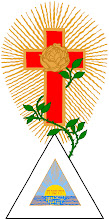
 The seals of S.R.C. and R.R. et A.C.
In different debates there are often expressed quite severe judgments against anyone attempting to sort out what is a true teaching and what is a false or deficient teaching. There is always someone who raises their finger and objects against these “unfraternal manners”. But when we look at the above quotations taken from two central initiatory rituals is turns out that it is the obligation of a true Adept to test any claims made of such Adepthood and claims of Rosicrucian Theurgy and Alchemy. And we all know that knowledge of Alchemy is seriously lacking in the contemporary Golden Dawn community. It doesn’t suffice to have read the works of Frater Albertus or Manfred Junius, and put whatever they have said to the test tube, to claim to be a true Artist. Whatever you may gain of experience from that endeavor is but Plant Spagery (i.e. the Lesser Work), and even that requires many, many hours in the lab. Imagine then gaining a true proficiency in the Great Work, which truly is a Herculean task! So any claims of Alchemical knowledge by Golden Dawn Adepts (and especially them!) have to be tested (for the sake of the general public), especially if they publish books which claims to represent “Golden Dawn Alchemy”, which is an oxymoron in our post-modern age.
So quite naturally, and justly so, in the wake of Pat Zalewski’s new book on Alchemy and Golden Dawn Ritual there has erupted a quite heated debate over the value of Alchemy and how it should be implemented with the Golden Dawn Tradition. This discussion has also developed into a general discussion concerning the true nature of Alchemy, in relation to the paths that we
 could term as “external”, “internal” and “spiritual”. And when we are dealing with the latter two terms they often become confused or conflated in any discussion concerning Alchemy or the Royal Art.
This confusion arises from the fact that much what passes for “internal” actually isn’t the real thing. Compared to the Western Tradition, Eastern Tradition speaks lots more in plain language than does its Occidental counterpart, although not all of the Eastern Alchemical Tradition is in print. However, Western source texts are lots more occulted and tending to metaphorical compared to the plain and direct explanations in the various Sutras and Tantras, etc. Therefore Alchemy is such a confused topic today in the West, compared to the situation in the East where there exists a general agreement of what it constitutes. Thus it is my firm opinion that one needs to agree upon certain standards when discussing Alchemy, so that we as participants know what we are referring to, to prevent any further confusion. Let me therefore present the following and tentative definition of these terms.
At the onset I must emphasize that when I talk about “Internal” or “Inner” Alchemy I am specifically referring to physical processes of the microcosm (or between two microcosms), not at all mental processes or intellectual correspondences. Read this again and carefully: Internal alchemy, as has been stated again and again both by me and other representatives of my Order, involves tangible matters and energies, not cognitive or mental functions per se. That latter type of alchemy which solely deals with mental processes I am here referring to as “spiritual alchemy”.
On this blog I use the following terms and definitions, and I expect you to use these as well when engaging in discussions with me here:
External Alchemy = Archemical and Spagyric processes, which has their basis on the Hermetic philosophy and Alchemical formulae that utilizes an external laboratory (such as artificial ovens, flasks, crucibles, etc.) using the mineral, plant and animal kingdoms of physical matter. Archemy is Spagery worked upon the mineral kingdom, whereas the processes involving the plant kingdom only concerns Spagery. This may also be referred to as “Exoteric Alchemy”, or the Lunar Mysteries of analogy. It is related to ordinary chemistry (and is its forerunner), as it uses its matters, but follows alchemical principles.
Internal Alchemy = Alchemical processes (proper) that uses the internal laboratory (the human body, both physical and subtle), either directly manipulating energies or using physical substances from the Alchemist’s body (animal kingdom), strictly following Hermetic principles and dogma. This may also be referred to as “Esoteric Alchemy” or the direct Solar Mysteries.
Spiritual Alchemy = Mental, spiritual and psychological phenomena being explained using alchemical symbology and processes as metaphors. It is however not based upon Hermetic philosophy but rather theology or psychology or magic in general, using the superstructure of Hermeticism to expound the latter disciplines. Perhaps a good alternative term, which is more intuitive, is to refer it to a “Mystical Alchemy”, and furthermore I also propose the term “Mercurial Mysteries”, as it involves the intellect and psyche, as well as the volatility of their constructs.
Note: I know that this division is a mental construct in itself (i.e. Mercurial), and that all these “ways” or perspectives are interlaced, also in specifics, to create but One Universal Alchemy. But if we are to understand what we are talking about here without any confusion, let’s stick to these simple definitions when using terms as “Inner” or “Internal”, at least on this blog.
Now that we have settled on a common vocabulary, and having agreed upon these simple definitions of Alchemy, let me proceed with the subject matter of this essay, following the adage of the Adeptus Minor Obligation: that of artistry and puffery. Now this last clause of the obligation that is required of an Adept of any Rosicrucian body obviously isn’t one of the nicest. On this I agree. It is not without reason is has been attributed to the last of the divine emanations, the Sephirah Malkuth or the Kingdom (that of the manifest matter). But nevertheless, it is a necessary one that any true Adept must follow, if the need arises, as any other of the clauses.
Before we proceed with the current debate from this somewhat severe viewpoint, let me first try to define what I (and many Adepts with me) mean with the terms “Artist” and “Puffer”. In my opinion there are not only two but three major categories of professed alchemists as well as occultists in general; the true artist, the puffer and the charlatan. The Artist or Artisan is someone who is an initiate of Hermetic Alchemy and follows true processings in producing the
 Philosopher’s Stone, knowing well that alchemical texts uses metaphors for their processes and “decknamens” for their different matters. He is not your ordinary greedy Chrysopoeist (“goldmaker”).
The puffer is often well meaning and serious, but because he lacks proper initiation has lost his ways in the maze – the labyrinth (the convolutions of the brain) – and cannot distinguish between analogy and literal meanings in the case of the external laboratory practitioner. The word “Puffer” or “souffleur” is a reference to the use of bellows when heating the ovens, and hints at someone bellowing in vain for his quest of producing gold. In our modern age this term may also be used in reference to intellectual constructs, castles built up of “hot air” so to speak, which have no foundation in any true Alchemical teachings.
The last category, and of course the worst, is that of the charlatan. He is one who knows that he is a fake but has developed his deceptive abilities sufficiently enough to get away with pretending to be an artist. The source image is the travelling salesman who tries to convince you that he may help you with any problem or against any ailment, only if you buy his “universal panacea”. These fakers don’t concern us at all in this current debate. I will only deal with artists and puffers in this essay.
Now if anyone writes about Alchemy, especially when it deals with the Rosicrucian Tradition such as the Golden Dawn, his knowledge must be tested by the true Artists. These latter have always been quite severe against charlatans and puffers in the past Centuries. Just pick up any alchemical tract of choosing and you will see it often starting off with a long judgmental critique, vitriol even, against false alchemists and their false understanding of the true nature of the Stone and that of the Prima Materia. Let me quote the Master Alchemist Michael Sendivogius and the opening lines of his The New Chemical Light, which serves to be a typical example of this attitude:
When I considered in my mind the great number of deceitful books and forged Alchemistic “receipts”, which have been put in circulation by heartless impostors, though they do not contain even a spark of truth – and how many persons have been and are still daily led astray by them? – it occurred to me that I could not do better than communicate the Talent committed to me by the Father of Lights to the Sons and Heirs of Knowledge. […] The facts and deductions which I have here briefly set down are transcribed from that manual – experience, graciously bestowed upon me by the Most High; and my object is to enable those who have laid a sound foundation in the elementary part of this most noble Art, to advance to a more satisfying fullness of knowledge, and to put them on their guard against those depraved “vendors of smoke,” who delight in fraud and imposition. […] In these wicked days, indeed, when virtue and vice are accounted alike, the ingratitude and unbelief of men keep our Art from appearing openly before the public gaze. Yet this glorious truth is even now capable of being apprehended by learned and unlearned persons of virtuous lives, and there are many persons of all nations now living who have beheld Diana unveiled. But as many, either from ignorance or from a desire to conceal their knowledge, are daily teaching and inducing others to believe that the soul of gold can be extracted, and then imparted to other substances; and thereby entice numbers to incur great waste of time, labour, and money: let the sons of Hermes know for certain that the extracting of the essence of gold is a mere fond delusion, as those who persist in it will be taught to their cost by experience, the only arbitress from whose judgment seat there is no appeal. If, on the other hand, a person is able to transmute the smallest piece of metal (with or without gain) into genuine gold or silver which abides all the usual tests, he may justly be said to have opened the gates of Nature, and cleared the way for profounder and more advanced study. […] Let me therefore admonish the gentle reader that my meaning is to be apprehended not so much from the outward husk of my words, as from the inward spirit of Nature. If this warning is neglected, he may spend his time, labour, and money in vain. Let him consider that this mystery is for vise men, and not for fools. The inward meaning of our philosophy will be unintelligible to vainglorious boasters, to conceited mockers, and to men who smother the clamorous voice of conscience with the insolence of a wicked life; as also to those ignorant persons who have fondly staked their happiness on albefactions and rubrefactions and other equally senseless methods.Remember that alchemy is an operative (that is experimental) spiritual science and as any science there will be heated debates amongst scientists, especially it if turns out that a layman has put out a book which claims to be scientific.
Let us first turn our attention to the concept of “spiritual alchemy”, that kind which supposedly is addressed by Mr. Zalewski in his new book on Alchemy and Golden Dawn Ritual. Now, Mr. Zalewski tries to interpret the much older Alchemical Tradition from the outlook of the quite young (or rather infant) Golden Dawn Tradition. Mr. Zalewski’s publishers has stated the motivation behind his approach quite plainly thus:
This book is the first attempt to publicly analyze the Outer Order rituals with an alchemical frame of reference completely within the context of Golden Dawn teachings. This is the condition used by Pat for the expansion and development of the higher teachings, i.e., they must enrich and inform everything else in the Golden Dawn or they cannot be part of the established Tradition.This looks good on paper but the problem is that the Alchemical Tradition, that has so much more to offer to the aspiring and diligent student compared to the Golden Dawn Tradition, becomes diluted in this effort to make it fit into the latter. I have written about this before on my blog so there is no need for me to repeat myself here.
If you read that previous blog you will notice that I am quite open minded concerning some forms of spiritual interpretations of the Golden Dawn Tradition. For example I believe that there is some fruit to harvest in the attempt of attributing the stages of the initiatory process of the Golden Dawn with that of the stages of the Alchemical Process, which traditionally is
 distinguished by different colour attributions in the following order; Nigredo (Blackening), Cauda Pavonis (Peacocks Tail), Albuedo (Whitening), Citrinas (Yellowing) and finally Rubedo (Reddening).
Now I have to confess that I haven’t read Mr. Zalewski’s latest book yet (thus this cannot be considered to be a review), but it is my understanding from other’s descriptions that he regards the entire Outer Order of the Golden Dawn as being part of the Blackening Phase – the Nigredo – of the Alchemical process. On this part I actually agree with him. But it doesn’t seem to stop there, as Mr. Zalewski has introduced an entirely new concept to Alchemy, which at least I have never heard of before, that of sub-phases. This means that he regards the 1°=10° to correspond to a “Nigredo of Nigredo” phase, that of 2°=9° to an “Albuedo of Nigredo”, that of 3°=8° to a “Citrinas of Nigredo”, and lastly that of 4°=7° to a “Rubedo of Nigredo”.
This arrangement is somewhat reminiscent of the division of the Elements into sub-elements when using Malkuth as the symbol of Earth and its four divisions into sub-elements of Earth. Looks nice on paper if you only have the Golden Dawn as the base for your understanding. The problem arises when you try to understand the Royal Art itself based upon such speculative theories, as this arrangement has no basis at all in traditional Alchemy. So here we see a typical example of transforming the Alchemical Tradition to suit Mr. Zalewski’s understanding of Golden Dawn Ritual. In the light of these new ideas of his, taken together with whatever I have read of Mr. Zalewski on his yahoo-forum and his previous speculations concerning the attribution of the Tarot and the three alchemical phases, and 7 and 12 processings, I would categorize him to be the post-modern equivalent a puffer. He is not a charlatan as some would have him to be. Even if I cannot see any true artist in him I regard him to be at least sincere in his endeavors. What can be held against him though is that he trusts his own intellect and likes his own ideas to much and thus is caught up in the labyrinth of his own imagination.
 Pat Zalewski
However, it does happen from time to time that even a puffer can contribute something to our understanding of alchemy (and in this case of the Golden Dawn), if he is benigned with the Grace of God. As an example of this I found his “Alchemical Pentagram” to be quite useful reading his original edition of the Golden Dawn Ritual Commentaries book, as it is based upon the Alchemical theory of the “Golden Chain of Homeros”, although I have arrived at somewhat different conclusions using that polygram model. However, I cannot say if Mr. Zalewski has been so blessed lately as I haven’t read his latest book. I’m not even sure if I will ever read it because my precious time is so short and the work load to great; I prefer to read classical alchemical source texts in contrast to recent inventions or fabrications. I have to make priorities, and to be honest, I believe that Mr. Zalewski has written his best works already (which I already have in my shelf). What I have heard others say about the book hasn’t made me change my mind as of yet. But I’m still considering reading it, and if I will do that I will come back to you with a full review that may perhaps alter my preliminary conclusions in this essay. It is always my prerogative to change my mind as I see fit and if I stand corrected.
 The Alchemical Pentagram
At least I don’t refute Mr. Zalewski’s knowledge of Golden Dawn Theurgy and ceremonial (and as I said, from time to time even I find some things he has written in his Ritual Commentaries to be useful). Together with a thorough textual understanding of the classical alchemical corpus fused with an extensive experience of at least external operative laboratory practice, it may create some workable fruit or at least some interesting speculation. But regarding the alchemical operative knowledge or experience of Mr. Zalewski, he has himself on several occasions confessed, information that has also been corroborated lately by individuals that have known him when he was living in New Zeeland with his ex-wife Chris Zalewski, that it was in fact she who did a great deal of work with Plant Spagery, whereas he himself did not. She even published
 a book on the subject in the early 1990’s called Herbs in Magic and Alchemy (which is more of a magical herbalist’s handbook than an alchemist’s, the latter part heavily based upon Frater Albertus’ The Alchemist’s Handbook, including its omissions of important steps which leads the reader to a ruined elixir!).
Mr. Zalewski is designating his take on Alchemy as a “spiritual alchemy”, in contrast to laboratory practice. He apparently emphasizes that his perspective is not that of the lab practitioner, i.e. non-operative. With this in mind, I personally wouldn’t even refer to his puffery as being of anything “spiritual”, but rather being a kind of “speculative” alchemy in the same vein as the works of C.G. Jung, etc. (At least he is in some really good company!) However, true Spiritual Alchemy brings connotations to great teachers such as Jacob Böhme, who was a true Artist in his own right, although he probably never touched a flask in his lifetime as well. However in contrast to Mr. Zalewski, Böhme based his alchemical ruminations upon spiritual revelations and processes of transformations that he himself had undergone through the grace of God. Some would categorize Böhme’s works as that of prophecy, in the same vein as some consider the works of Emanuel Swedenborg. However, Mr. Zalewski is neither a modern Böhme nor is he a Swedenborg.
 Jacob Böhme
If you want to study some really good and initiated Spiritual Alchemy, read whatever Paul Foster Case has written on that subject. In my opinion Case was a good enough initiate of the Royal Art to be trusted when reading his works. The good thing about his teachings is that they border on that of true Internal Alchemy; there is no clear cut division between the Spiritual (i.e. mental) and Internal (i.e. physical) aspect of the Art in his writings. It is this fact that make them so interesting and inspiring to read.
In my humble opinion, from where I am standing today, I hold that it is quite futile to try to understand true Hermetic Alchemy solely from the paradigm of the 22 Tarot Trumps or even the 22 letters of the Hebrew alphabet, for example interpreting the Splendor Solis (who happens to have 22 plates) from the viewpoint of the Tarot. (However if you do the analysis the other way around, that is interpreting the Trumps and letters from the viewpoint of an initiated Alchemical understanding, this might shed some light to the former). Remember however that although both Hermeticism and the Qabalah share a common origin in Egypt and in Chaldean concepts, they both have developed far from each other over the course of many millennia; not to mention that one has retained its pagan roots while the other has not. It is only quite recently, during the renaissance, they both were re-merged together by our Italian Masters and Philosophers, and in the process joined together with the occult doctrine of the Tarot.
But if you resort to using the Tarot and the Holy Qabalah to explain the Art of Alchemy, as does also Paul Foster Case but in an entirely different manner than that of Mr. Zalewski, you have to have a fundamental understanding of the latter to be able to use the former two as pedagogical tools. That is why I can truly recommend Case’s material as a valuable study subject for any initiate, as I know for a fact that Paul Foster Case also involves the physical body as the Prima Materia, however not in such a direct way as that of the Internal Alchemy of my teachers. However, P.F. Case’s understanding of Alchemy is not that of pure intellectual speculation as that of Mr. Zalewski. They are playing in completely different divisions, in my humble opinion.
 Paul Foster Case
What Mr. Zalewski is trying to do is to make his readers and students to learn to understand Alchemy from the narrow perspective of the Golden Dawn tradition, which in my humble opinion is a quite fruitless endeavor. However, and of which I previously have hinted at, if you apply the Royal Art itself (that is as a discipline independent from both the Qabalah or the Golden Dawn) onto the Golden Dawn Tradition, you will see the latter in a completely new light. At least for me it has been a true eye opener. Thus I truly believe that the Royal Art may unlock many hidden secrets contained in the Golden Dawn (as the latter is derived from the former), and probably also contained in the Qabalah as an independent tradition, but that you will develop truly false notions about Alchemy if you try to force it into a post-modernist Golden Dawn model in your analysis.
Only in special circumstances and on rare occasions, and through the Grace of God, may you gain some understanding of the Royal Art in meditating on the symbolism of the Golden Dawn, but never in its entire. You have to receive the Keys from a true source to unlock the hidden meanings of Alchemical symbology, and thus may you also unlock the deeper Secrets of the Golden Dawn. These Alchemical Keys has traditionally been bestowed through initiation – the relation between an Alchemical Master and his Disciple – and only in extremely rare cases through direct divine revelation.
But in the post-modern mind there is a strong reluctance or suspicion against the traditional alchemic initiatic norm of passing the body of teaching (orally) from Master to Apprentice or
 Disciple. One often holds that the Western path, contrary to the Eastern, is more individualistic. It is that, but not at all to the extent we have come to believe in our post-modernist magical culture of the post-Crowleyan – post-hippie era. Following the “True Will” today seems to mean never following the advice of anyone besides one’s own whims and impulses. However the relationship between an Alchemical Master and that of his Disciple, is not that of a Master and Slave. There is lots of room left for trial en error. You have to do the work yourself; your Master cannot do it for you. The history of Internal Alchemy is also replete with examples of high initiates exploring different fields of investigation and further development.
I would rather term the Master-Apprentice relation as that of guidance. In case you are wondering, I would only follow the voice of my external Master if it resonated with the consent of that of my inner / higher Master Teacher (my own Divine Genius). It is also my understanding that the particular path of the initiate is suited to the character and preferences of the initiate; there is no general path that works for everyone. It is the task of the Master to recognize this unique character and individual quality and to guide his disciple accordingly, meeting the needs and wants of his apprentice.
We have now entered into the domain of the operative aspect of Alchemy; the quest for the Philosopher’s Stone. Regarding it the current debate has also revolved around the topic of External vs. Internal Alchemy and how to interpret classical Western Alchemical source texts. Belonging to both camps, that is, believing in the value of both internal and external
 processings, I don’t necessarily see the opinions that External and Internal students usually propagate as mutually exclusive. To use the Eastern traditions as a comparative example the Tantrikas and Naths, whose teachings are congruent with hermetic principles, believe alchemy to be a “work of two parts”. That is, Hatha Yoga and sexual practices (Internal processings), and that of laboratory alchemy (External processings), according to the Eastern Sages, leads to the same goal – the creation of the Diamond Body. Some of these Sages believe that one is dependent upon the other, even though they at first glance seem to be completely different operations and paths.
Hindu Alchemy involves Yoga (energetic manipulation of the body – trough direct manipulation, such as breathing, posture and visualization) and / or sacred sexuality (Tantra). But it also involves external processings using the mineral Cinnabar and different plants, referred to as Rasa Shastra or Rasayana. This in turn has developed into the tradition of Ayurveda – Indian medicine. We have the equivalent traditions in China and Daoism, which are referred to as Waidan (External Alchemy) and Neidan (Internal Alchemy). Furthermore, the Western Path of the Red Dragon (the path of Cinnabar) is very close in spirit to these Hindu and Daoist notions.
However the Trantrikas and Yogis described internal processings through the use of terms that were borrowed from the tantric outer alchemical practices. This is also seen between Daoist external and internal alchemy. Because I see alchemy as a universal language preceding all
 religions and classical spirituality, I cannot see any reason why this approach isn’t applicable also to Hermetic Alchemy. So, this means that even if an alchemical author describes processes using languages taken from the mineral realm, this doesn’t mean that he isn’t referring to internal corresponding principles. The case may also be that he is referring to both, that is seeing a full correspondence between external and internal laboratory practices, the one augmenting the other. It is my opinion that the so-called “Dry Path” of Fulcanelli, as described in his Les Demeures Philosophales (“The Dwellings of the Philosophers”), is such a description of a cross-operational technique, involving the Athanor of the external oven as well as that of the human body, but nevertheless independent process-wise. That is, the described process obviously may be performed either as an external or internal working. But my position in this matter is that both working approaches should be performed by the same Alchemist, however not necessarily simultaneously but rather the external preceding the internal (I will return to this sequence in a moment).
But even amongst the practitioners of External Alchemy, which is the most disclosed alchemical tradition contrary to the Internal, there is a division between what some refer to as “Archemy” and “Alchemy”, the latter or course being truer than the former. I have been following (and on some instances participated) over at a well known and acknowledged yahoo-group forum, who has many alchemical authorities of the external paths (and who dismisses Internal Alchemy altogether as that professed by practitioners who have lost faith in the external Philosopher’s Stone). Many speak openly but there are also some few others who seem to be very serious aspiring Sons of Hermes who regard the majority of open discussion concerning itself only with vulgar spagyrics and said archemy, and not that of true alchemy. However it seems that most of these latter reject the idea of an Internal Alchemical process as well.
For example most of these hail Fulcanelli as a true Alchemist but regard his closest pupil Eugène Canseliet (1899 – 1982) to be an Archemist, or even a puffer, who literarily seeks Antimony (or rather Stibnite) as the Prima Materia instead of the so-called “Mineral G”. I have also communicated with some alchemists (or rather archemists) privately who say they possess the keys to true alchemy (of the external way) but don’t share their knowledge with others. My experience is that alchemists are very exclusive, jealous and secretive when they do stumble upon a “true” matter and find yet another “true” processing. I have seen some of the most venomous discussions between alchemists discussing the nature of the true Materia Prima, etc. Thus secrecy comes natural with Alchemy.
 Eugène Canseliet
But these proud Alchemists (who actually are Archemists), who only perform the external ways, ironically falls into the same category as the puffers they regard all the others to be; divorcing external processings from that of the internal. They fall into the trap in believing that when Fulcanelli is ambiguous regarding the Antimony (the Prima Materia), that the name of that mineral must be a “decknamen” for some other than the “vulgar” mineral; they foolishly believe he is referring to yet another mineral when instead he is referring to the human body, the Offspring of Saturn, and the process itself as it was of an internal nature. So verily “Antimony” is a decknamen, not for another external mineral but of the human carbon based body instead.
A funny thing about some of the speculations revolving the Fulcanellian “Mineral G” is that it often is suggested to be Galena, the led sulphide, which in ancient times was referred to as kohl used as an eye paint, the earliest reference found in Egypt. The Swedish word “kol” and the German “khole” means carbon (the latter from the latin carbo). It shares its etymology with the English word coal (from the Anglo-Saxon col). Thus one cannot help thinking that Fulcanelli used some kind of play with words (“language of the birds”?), in this case using the Germanic language to actually refer to the human body. It is also interesting to note that the Alchemical symbol for Antimony (the reversed Venus
 symbol) also is a symbol for the planet Earth itself (Malkuth, which in the microcosm refers to the physical vehicle) and may be used as a general symbol for the Prima Materia.
Now, as with anything that has been claimed by the Rosicrucian Order of the Alpha et Omega, in the usual fashion of the “Golden Dawn community” some individuals have recently disputed the historical authencity of the term “Archemy” just because it doesn’t frequently show up on Google – that which isn’t on Google therefore cannot exist! At least not in the mind of a post-modern English speaking student of the occult.
Granted, it not a common term, but it has been used somewhat in the past. The Master Fulcanelli popularized it in his The Dwellings of the Philosophers back in 1930, where he makes a distinction between true esoteric Alchemy and that of exoteric Archemy (which is of a lesser and analogical nature); for Fulcanelli Archemy is synonymous to Spagery (the latter traditionally being regarded to be the lesser cousin of Alchemy). But there are earlier references to “Archemy” than that of Fulcanelli. The German chemist Hermann Franz Moritz Kopp (1817 – 1892) claims in his Geschichte der Chemie (“A History of Chemistry”) from 1869, that Coelius Rhodiginus (1469 – 1525) used the term “Archemie” in the latter part of the 15th Century. Claudius Salmasius (1588 – 1653) in his Plinianae exercitationes in Solinum from 1629 wrote “Patrum quoque nostrorum aevo Archemia dicebatur et Archemista”. Furthermore, the English edition of Sir George Ripley’s 12 Gates from 1591 says “The compound of alchymy, or the ancient hidden Art of Archemie”. In his Ordinall of Alchemy from 1477 Thomas Norton (1433 – 1513) writes “Mastrye full merveylous and Archimastrye Is the tincture of holi Alkimi”.
The definitions between Alchemy and Archemy obviously has changed during the years, at least if we confine ourselves to published references. They have often been synonymous of the same Art, but some authors, such as the Venetian priest Giovanni Agostino Pantoea in his Ars transmutationis metallicae (“Art of the transmutation of metals), from 1519, made a distinction between them but reversing the meaning and regarded Archemy to be more noble than Alchemy. However, this must be seen in the light of the bad reputation that charlatans and puffers had brought to the name of “Alchemy” during the 16th Century, which had led to the Pope Leo X banning Alchemy altogether but obviously allowing the practice of “Archemy” as he allowed Pantoeas book to be printed.
But it was Fulcanelli who in public presented us with the modern definitions of the terms “Alchemy”, “Archemy” and “Spagery” that I and my Order use whenever we speak of this
 subject. At the end of this essay I have appended an extraction of the chapter in The Dwellings of the Philosophers that deals with these definitions, so that you may read the words of the Master himself.
Don’t let the quite recent publication of Fulcanelli’s books put you off in reading it. The Dwellings of the Philosophers is by many authorities on Alchemy regarded to be the last in line of classical and true Alchemical texts that has been published. During their 80 years of circulation they have become legendary, as well as the purported feats of its anonymous author (who supposedly succeed with the Great Work, that is produced the Philosopher’s Stone, and gained immortality).
I know of modern students of Alchemy that have committed the entire The Dwellings of the Philosophers to memory – who know it by heart. This says something about its importance and impact in the alchemical community. Most have heard about Fulcanelli’s Le Mystère des Cathédrales (“The Mystery of the Cathedrals”) from 1929 but few Golden Dawn students have heard of his second and more important title (he only published two books), even though it has been translated into English.
I have written about Fulcanneli’s Path of the Black Dragon before on my blog, albeit from an entirely external and exoteric point of view (which is the most common) in where I also in passing mentioned the term “Archemy”, and whatever I said there still holds and doesn’t contradict anything I have said here. In my opinion, the path that Canseliet and his followers has handed down to us, doesn’t constitute any puffery. It is however Archemy. And it was probably taught in this way to Canseliet by Fulcanelli himself. What many seem to fail to understand is that Fulcanelli also taught a way of Internal or Esoteric Alchemy (or Alchemy proper) to complement the External processes of Archemy. This is not only stated by the Secret Chiefs of the Third order of the Alpha et Omega, in a recent communiqué of theirs, but it has also been claimed by independent French sources, such as by the renowned and acclaimed occultist Robert Ambelain.
Thus the external path of the Black Dragon (using Stibnite) only becomes a sign of puffery when you detach it from the overall Alchemical doctrine which also involves corresponding internal
 processes, in which latter case it represents Archemy. Even if I personally prefer to use the terms Internal Alchemy and External Alchemy (for Archemy and Spagery), it must be clear to everyone that whenever I speak of “Archemy” I’m not referring to puffery at all but in fact to that of external alchemical processings, using Hermetic Philosophy as a basis.
Thus it is in my opinion equally possible to produce an external Philosopher’s Stone with transmuting virtues through Archemy as it is to produce an internal Stone through Alchemy. However, any External Stone cannot be compared to the value of the Internally produced Stone.
But let us regress and involve the concept of Spiritual Alchemy again in our discourse. I firmly believe that both Internal and External processes involves (or are supposed to involve) also the spiritual aspect of ourselves. Furthermore, there is a borderline area between Magic (or Theurgy) and that of operative Alchemy, for example when we discuss the topic of clairvoyance. However, practices which most occultists associate with the words “meditation” and “skrying” isn’t part of the Alchemical practice per se. Skrying more belongs to magical practice. But on the other hand, clairvoyance too has an important part in the processes of Internal Alchemy. And to complicate matters further, Magic is often used in conjunction with Alchemy, both in External and Internal approaches, which also helps to bring in the spiritual aspect of the work.
For example, when I perform an external lab process I usually invoke the forces corresponding to the operation through Ceremonial Magic, and I also do meditations and skryings, with the object to involve my person or microcosm in the external process as well as bringing in the aid of macrocosmic spiritual forces. Contrary to the modern scientific paradigm, which advocates dispassion and separation between subject (scientist) and object, Alchemy involves the Alchemist in a much more profound way, whether it is of the External, Internal or Spiritual kind. Alchemy, as is also the case with Theurgy, is thus about the merging of the microcosm with the macrocosm.
When I perform an internal process my entire being, also the spiritual, becomes involved by default. However, it is not necessary to perform the External and Internal processes simultaneously on every occasion. My conviction however is that the Great Work would be
 enhanced if we worked both with our external as well as internal laboratory. I also believe that External Alchemy (in conjunction with Theurgy) serves as a good preparation for Internal Alchemy, i.e. that the emphasis changes from the external (macrocosm) into the internal (microcosm) over time.
In the work with Alchemy, as it is envisioned in a Golden Dawn context, you have to start off with the external and tangible first and through the internalization process move on into the internal. This is the same process also with Ceremonial; you have to build yourself your Elemental Weapons (or whatever implement) physically before you are able to use their internal equivalents. Through this process you will also affect your spiritual nature until you are able to produce the physical transmutation. When you are able to do that, you no longer need the external props.
I have suggested elsewhere to this effect, to use the Golden Dawn initiatory system as a frame work, that external processings are more suited for the Second Order, or the R.R. et A.C., while the internal processings are more suited for the Third Order level of work. However, there are some minor and energetic exercises, of a preparational kind, that may supplement the external processes also at a Second Order level.
There is a general agreement in the Hermetic discourse that amongst other things the Emerald Tablet of Hermes introduces the concept of correspondence between the Microcosm and Macrocosm, when it states that “What is the above is from the below and the below is from the above. The work of wonders is from one.” In the latest translation by Nineveh Shadrach it further and in plain words states that “The formation of the microcosm is in accordance with the
 formation of the macrocosm.” Now, to me these words ring with the sound of wisdom and provide me with a theory of science. They are no empty words to me.
(And in the case of someone raising his finger in objection to me adhering to such outdated theorems: Do I care what the modern scientific paradigm claims as to scientific veracity? And please don’t tell me that modern science isn’t just another faith based system as any other, including religion. Because it is. It even has its own fundamentalists!)
Thus, my main argument is that there is a correspondence between internal and external processes and substances through analogy. As above, so below. As internal, so external. Whatever is in the greater, is also in the smaller. This is a fundamental hermetic principle. Alchemy – and Magic – is about the fusion of the macrocosm with the microcosm. The Law of Correspondences concerns the relation between the Greater / Outside world with the Smaller / Inner World. This is the standard Hermetic definition of the term, which is used both in Magic and in Alchemy.
(Of course the doctrine of the Law of Correspondences – as per example in Aleister Crowley’s Liber 777 – are also used to knit the different macrocosmic parts together, such as plants,
 minerals, planets, etc., as for example through the Paracelsian doctrine of signatures, which is then applied to the healing of the body and soul of the Magician and Alchemist.)
What I am referring to when I talk of analogy between internal and external processes involves physical matters and actions, not behavioral or psychological phenomena. That latter category of phenomena falls under the “spiritual alchemy” heading. The external is represented by the chemicals and matters and laboratory equipment. Each kingdom has its equivalent Sulphur, Mercury and Salt. The Mercury of Microcosmic Man isn’t the same as that in a Macrocosmic Mineral, but they are the same principle nevertheless and are ruled by the same laws that have their origin in the highest spiritual.
(With the highest spiritual I’m referring to the Hermetic ALL, the ONE. GODHEAD. The DIVINE. I believe Eastern people refer to this as the Causal or spiritual plane (the one that precedes the mental, astral, etheric and physical); the plane of the Brahman.)
To me Nature’s minerals and plants and animals constitute parts of the Macrocosm. My own
 body parts and fluids, and energetic currents, clearly constitutes the microcosm. So when I want to work alchemically with the macrocosm, I perform external lab alchemy, with the objective to fuse it to my microcosm. Not only do I take the elixirs internally and fuse it with my physical body, for the purpose of healing and regeneration, I also align myself astrally and mentally through skrying and meditation with the process to further this aim.
Why then go through all of this arduous and tedious practice of fusion between the microcosm and the macrocosm? Why not let everything be as it is; why manipulate nature to produce such “unnatural” effects? We have to ask ourselves why this division has occurred in the first place to answer these questions.
The theory of Alchemy agrees with that of Gnosticism and the Holy Qabalah, that Man’s condition is that of being in a “fallen” state. This fall is hinted at in the first chapters of Genesis. Thus, we do have a divine origin but through our life in this exiled and differentiated condition
 of the Material World we have isolated ourselves from the Macrocosm, through the illusions and convolutions of the mind, and thus also energetically. The work of Alchemy and Magic is reintegration, both of our own separated parts (in our mind and body) but also of ourselves as a separated part of the macrocosm.
Some argue that we as Man are in perfect union with the Universe as it is and that thoughts contrary to this is an illusion. But I ask: Is someone living under the Wheel of Samsara truly one of the gods or demi-gods, in full tune with the Brahman? Is our life here on Earth truly a perfect or ideal condition? Why then do we have to meditate? Why do we have to create conditions of reaching Samhadi if we as Atman already are in perfect union with the Brahman? Why do we even have to dissipate that “illusion” of ours in the first place?
Alchemy is about following Nature but it is also the Art of speeding up Her processes. I want to reach Immortality (leave the wheel of Samsara) and become “more than human” in this life. Not in the next. Enough said by me, who is but a Neophyte of our Royal Art. Let us now instead read the words of wisdom from one of our past Masters, a true Son of Hermes, of which I promised previously. If there is any confusion left from reading my all too over-worded exposition, all that will be dissipated from now on:
An extract from Fulcanelli's The Dwelling of the Philosophers, Chapter VII - Alchemy and Spagyrics
Since Lavoisier, all the authors who have written on the history of chemistry agree to profess that our chemistry comes by direct affiliation from old alchemy. Consequently, the origin of the one is confused with that of the other, to such an extent that modern science would owe the positive facts on which it is built to the patient labor of the ancient alchemists. […] Well, we in turn certify, proposing to prove it, that learned men who have in good faith espoused or propagated this hypothesis deluded themselves by ignorance or a lack of penetration. Understanding only in part the books they studied, they mistook appearance for reality. Let us clearly state, since so many educated and sincere people seem unaware of the fact, that the real ancestor of our modern chemistry is ancient spagyrics and not the hermetic science itself. There is indeed a profound abyss between spagyrics and alchemy.
There was in the Middle Ages and possibly even in Greek antiquity, if we refer to the works of Zosimos and Ostanes – two degrees, two orders of research in chemical science: spagyry and archemy. These two branches of the same exoteric art spread throughout the working class by means of laboratory practice. Metallurgists, goldsmiths, painters, ceramic artists, glassmakers, dyers, distillers, enamellers, potters, etc., had, as much as apothecaries, to be provided with sufficient spagyric knowledge. They perfected this knowledge themselves later on in the exercise of their profession. As for archemists, they formed a special category, more restricted, more obscure also, among the ancient chemists. The aim which they pursued presented some analogy with that of the alchemists, but the materials and the means which they had at their disposal were uniquely chemical materials and means. To transmute metals into one another, to produce gold and silver from coarse minerals, or from saline metallic compounds, to force the gold potentially contained in silver and the silver potentially contained in tin to become real and extractable, was what the archemist had in mind. In the final analysis, he was a spagyrist confined to the mineral realm and who voluntarily neglected animal quintessences and vegetable alkaloids. And since medieval laws forbade private possession of furnaces and chemical utensils without preliminary permission, many artisans, their work once finished, studied, manipulated, and secretly experimented in their cellars or their attics. They cultivated the science of the little particulars, according to the somewhat disdainful expression of the alchemists for these side activities unworthy of the philosopher. Without scorning these useful researchers, let us recognize that very often the most fortunate among them only obtained mediocre benefits, and that the same process, at first successful, later led to nil or uncertain results.
Nevertheless, in spite of their errors – or rather because of them – it is they, the archemists, who provided first the spagyrists and later modern chemistry with the facts, methods, and operations they needed. These men, tormented with a desire to search everywhere and to learn everything, are the true founders of a splendid and perfect science to which they bestowed accurate observations, exact reactions, skillful manipulations, and painfully acquired techniques. Let us humbly salute these pioneers, these precursors, these great workers, and let us never forget what they did for us.
However, we repeat, alchemy has nothing to do with these successive contributions. Hermetic writings alone, misunderstood by profane investigators, were the indirect cause of discoveries which the authors had never anticipated. It is in this manner that Blaise de Vigenere obtained benzoic acid by sublimating benzoin; that Brandt could extract phosphorus by seeking the alkahest in urine; that Basil Valentine, a prestigious Adept who did not despise spagyric experiments, established the entire series of antimonial salts and the colloid of ruby gold; that Raymond Lully prepared acetone, and Cassius the purple of gold; that Glauber obtained sodium sulphate and Van Helmont recognized the existence of gases. But, with the exception of Lully and of Basil Valentine, all these researchers, wrongly classified among alchemists, were simple archemists or learned spagyrists. This is why a famous Adept, author of a classical work, can say with much reason: “If Hermes, the Father of philosophers, was resurrected today, along with subtle Geber, and the profound Raymond Lully, our vulgar chemists would not regard them as Philosophers, and would practically not condescend to number them among their disciples, because the latter would not know the manner of operating all these distillations, circulations, calcinations, and all these innumerable operations which our vulgar chemists invented for having misunderstood the allegorical writings of these Philosophers”.
With their confused texts, sprinkled with cabalistic expressions, the books remain the efficient and genuine cause of the gross mistake that we indicate. For, in spite of the warnings, the objurations of their authors, students persisted in reading them according to the meaning that they hold in ordinary language. They do not know that these texts are reserved for initiates, and that is essential, in order to understand them, to be in possession of their secret key. One must first work at discovering this key. Most certainly these old treatises contain, if not the entire science, at least its philosophy, its principles, and the art of applying them in conformity with natural laws. But if we are unaware of the hidden meaning of the terms – for example, the meaning of Ares, which is different from Aries and is closer to Arles, Arnet, and Albait – strange qualifications purposely used in the composition of such works, we will understand nothing of them or we will be infallibly led into error. We must not forget that it is an esoteric science. Consequently, a keen intelligence, an excellent memory, work, and attention aided by a strong will are not sufficient qualities to hope to become learned in this subject. Nicolas Grosparmy writes, “Such people truly delude themselves who think that we have only made our books for them, but we have made them to keep out all those who are not of our sect”. Batsdorff, in the beginning of his treatise, charitably warns the reader in these terms, “Every prudent man”, he says, “must first acquire the Science if he can; that is to say, the principles and the means to operate. Otherwise he should stop there, without foolishly using his time and his wealth. And so, I beg those who will read this little book to credit my words. I say to them once more, that they will never learn this sublime science by means of books, and that it can only be learned through divine revelation, hence it is called Divine Art, or through the means of a good and faithful master; and since there are very few of them to whom God has granted this grace, there are also very few who teach it”. Finally, an anonymous author of the 18th century gives other reasons for the difficulty that we encounter in deciphering the enigma: “Here is”, he writes, “the first and true cause why nature has hidden this open and royal palace from so many philosophers, even those gifted with a very subtle mind. Because, straying since their youth away from the simple path of nature through conclusions of logic and metaphysics, although ingenuous nature advances in a straight and very simple step in this path as in all the others”.
Such are the opinions of the philosophers about their own works. How can we be surprised then, that so many excellent chemists took the wrong path, and that they deluded themselves by inquiring into a science whose most elementary notions they were incapable of assimilating? And would it not be a great service to render unto others, unto neophytes, to advise them to meditate upon this great truth which the Imitation (Book III, Ch. II, v.2) proclaims, when it says, speaking of the sealed books: “They can make the sound of their words resound, but they do not provide any understanding at all. They give the letter, but it is the lord who unveils the meaning of them; they propose mysteries, but it is He who explains them. They show the path that must be followed, but He gives the strength for walking on it”. It is the stumbling block against which our chemists have tripped. And we can affirm that, if our scientists had understood the language of the ancient alchemists, the laws of the practice of Hermes would be known to them, and the philosophers’ stone would long have ceased to be considered a chimera.
We have stated earlier that archemists regulated their works according to hermetic theory – at least as they understood it – and that this was the point of departure for fertile experiments with purely chemical results. Thus they prepared the acid solvents which we use, and through the action of these on metallic bases they obtained the saline series well known to us. By afterwards reducing these salts, either with other metals, with alkalies, coal, sugar or fatty bodies, they recovered, without transformation, the basic elements which they had previously combined. But these attempts as well as the methods which appeal to it showed no difference with those practiced today in our laboratories. A few researchers, nevertheless, pushed their investigations much further; they remarkable extended the field of chemical possibilities even to such a point that their results seem doubtful, if not imaginary, to us. It is true that these processes are often incomplete and enveloped in mystery almost as dense as that of the Great Work. However […] our chemistry owes everything to spagyrists and archemists and nothing, absolutely nothing, to hermetic Philosophy.
The simplest archemic process consists in using the effect of violent reactions – that of acids on bases – so as to provoke, in the midst of the effervescence, the reunion of the pure parts, their irreducible combination under the form of new bodies. It is then possible, from a metal close to gold – silver preferably – to produce a small quantity of the precious metal. […] But this simple body, so easily obtained, although in a very small proportion, is it truly gold? Our sincerity compels us to say no or, at least, not yet. For even if it shows the most perfect outer analogy to gold, and even most of its properties and chemical reactions, still one essential physical characteristics is missing: density. This gold is less heavy than natural gold, although its own density is already greater than that of silver. We can therefore regard it as, not the representative of a more or less unstable allotropic state of silver, but rather as a young, or nascent gold, which further reveals its recent formation. Moreover, the newly produced metal remains capable of taking and keeping, by contraction, the increased density that the adult metal possesses. Archemists used a process which ensured nascent gold all the specific qualities of adult gold; they called this technique maturation or firming up, and we know that mercury was its principle agent. We find it mentioned in some ancient Latin manuscripts under the expression of Confirmatio. But archemy has other methods, whose results bring the proof of philosophical affirmations. They allow us to achieve the decomposition of metallic bodies, long considered to be simple elements. These processes, which alchemists know well, although they don’t have to use them in the elaboration of the Great Work, aim at extracting one of the two metallic roots, sulphur and mercury.
Hermetic philosophy teaches us that bodies have no action on bodies and that only spirits are active and penetrating. It is they, these spirits, these natural agents, that provoke in the midst of matter the transformations which we observe there, yet wisdom demonstrates through experimentation that bodies cannot form among themselves anything but easily reducible, temporary combinations. Such is the case of alloys, some of which are liquefied by simple fusion, and of all saline compounds. Similarly, alloyed metals maintain their specific qualities in spite of the diverse properties which they take on in the state of association. We can then understand of what usefulness the spirits can be in releasing the metallic sulphur or mercury when we know that they alone are capable of overcoming the strong cohesion which tightly binds these two principles between themselves.
It is essential first to understand what the Ancients meant by the generic and rather vague term of spirits. For the alchemists, the spirits are real influences, although they are physically almost immaterial or imponderable. They act in a mysterious, inexplicable, unknowable but efficacious manner on substances submitted to their action and prepared to receive them. Lunar radiation is one of these hermetic spirits. As for archemists, their conception proves to be of a more concrete and substantial nature. Our old chemists embraced all bodies under the same heading, simple or complex, solid or liquid, having a volatile quality liable to make them entirely sublimable. Metals, metalloids, salts, hydrogen carbides, etc., bring to archemists their contingency of spirits: mercury, arsenic, antimony and some of their compounds: sulphur, sal ammoniac, alcohol, ether, vegetable essences, etc.
Among the archemists who used gold to augment it, making use of formulas which led them to success, we will note the Venetian priest Pantheus; Naxagorus, author of Alchymia Denudata (1715); de Locques; Duclos; Bernard de Labadye; Joseph du Chesne, baron of Morance, appointed physician to King Henry IV of France; Blaise de Vigenere; Bardin, of Le Havre (1638); Mlle. De Martinville (1610); Yardley, the English inventor of a process which he transmitted to Monsieur Garden, glover in London, in 1716, and later communicated by Monsieur Ferdinand Hockley to Dr Sigismond Bacstrom, and which became the object of a letter from the latter to M. L. Sand in 1804; finally, the pious philanthropist, St Vincent de Paul, founder of Les Peres de la Mission (The Fathers of the Mission --- 1625) and of the congregation of les Soeurs de la Charite (The Sisters of Charity --- 1634), etc.
We will repeat one last time that of all the operations […], none can be related in any way to traditional alchemy; none can be compared to its own operations. A thick wall separates the two sciences, an insurmountable obstacle for those who are familiar with the methods and formulas of chemistry. We do not want to make anyone despair, but truth compels us to say that those who keep on performing spagyric research will never come out of the ways of official chemistry. Many modern chemists believe in good faith that they are resolutely going far from chemical science, because they explain its phenomena in a special manner without using any other technique besides that of the learned men whom they criticize. Alas, there have always been many of these erring and self-deluded people, and it perhaps for them that Jacques Tesson wrote these words of truth: “Those who want to accomplish our Work through digestions, through common distillations, and similar sublimations, and others by triturations, all these people are off the good path, in great error and difficulty, and they will never succeed because all these names, words, and manners of operation are names, words, and manners of metaphor”.
We believe that we have fulfilled our purpose and demonstrated […] that the ancestor of modern chemistry is not the old and simple alchemy but ancient spagyrics, enriched with successive contributions from Greek, Arabic, and medieval archemy.
If one wants to have some idea of the secret science, let him bring his thoughts back to the work of the farmer and that of the microbiologist, since ours is placed under the dependence of analogous conditions. For, as Nature gives the farmer the earth and the grain, and the microbiologist the agar-agar and the spore, similarly she gives the alchemist the proper metallic terrain and the appropriate seed. If all the circumstances favorable to the regular process of this special culture are rigorously observed, the harvest cannot but be abundant... In summary, alchemical science, of an extreme simplicity in its materials and its formula, nevertheless remains the most unrewarding, the most obscure of all, by reason of the exact knowledge of the required conditions and the required influences. There is its mysterious side, and it is towards resolution of this most difficult problem that the efforts of all the sons of Hermes converge.

Addendum (2014-03-13)
Since writing this blog yours truly is no longer affiliated with the Hermetic Order of the Golden Dawn, Outer Order of the Rosicrucian Order of Alpha Omega® (H.O.G.D./A+O®). However, my general view on this subject stays firmly unchanged, as expressed in the above written text, and what I have authored previously on the Gyllene Gryningen blog still represents my overall opinion. Any practices referred to in reference to the H.O.G.D./A+O® or otherwise suggested also apply to the Order that I am currently affiliated with, namely the Hermetiska Orden av Den Gryende Morgonrodnaden (“Hermetic Order of the Nascent Aurora”) or H∴O∴G∴M+R.
S∴R∴


 Sigmund Freud
 Carl Gustav Jung
 The anatomical model of the psyche according to C.G. Jung
 The World of the Qlippoth






 Inlägg


